CRISSCROSSING THE COUNTRY: Reminiscences of The Continental Walk 50 Years Later
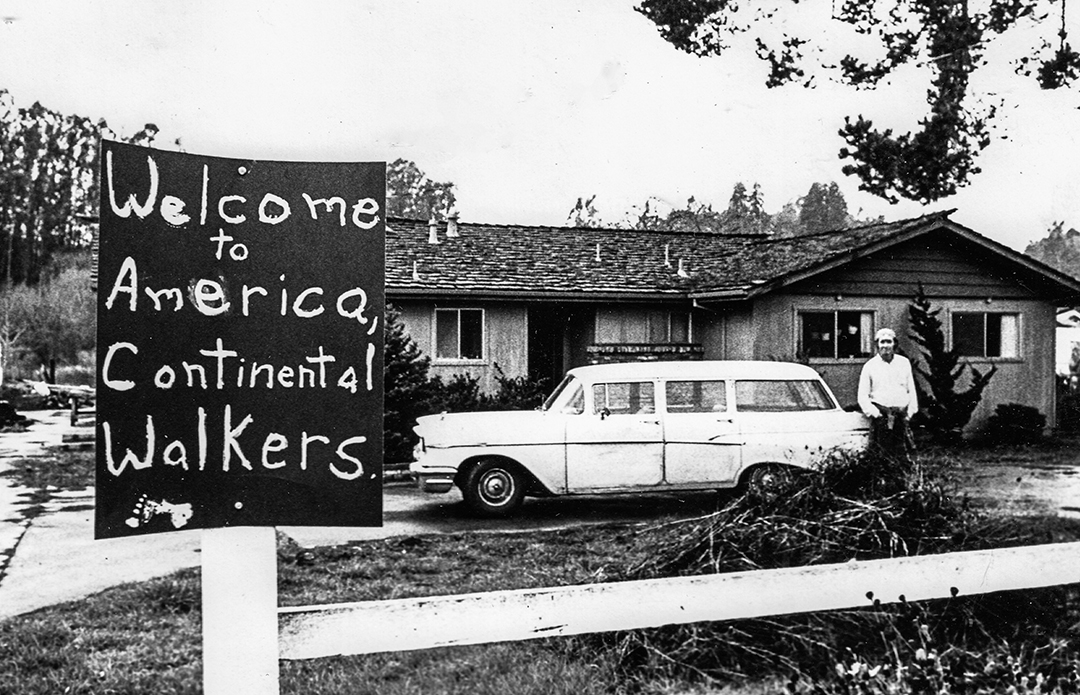
If it weren’t for local and regional organizers, the Continental Walk for Disarmament and Social Justice might just have been a single route from San Francisco to Washington DC. Local organizers throughout the country were The Walk’s unsung heroes, putting together events, generating publicity, contacting the media, setting up hosting, providing food, and coordinating with adjoining communities.
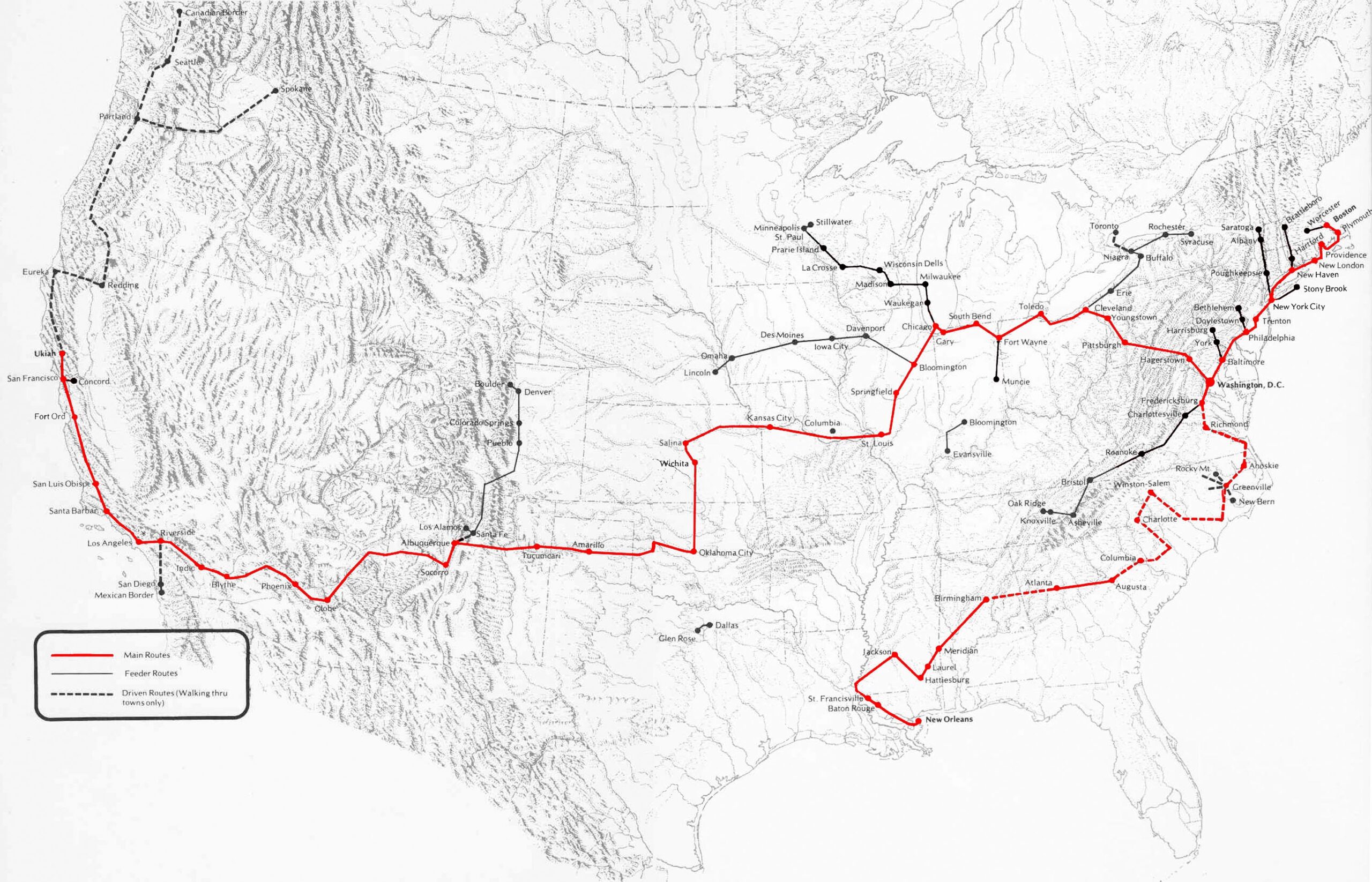
Consequently, our concept of a single route from San Francisco to Washington, DC, branched into three — with the additions of the southern route from New Orleans, largely organized by the Southern Christian Leadership Conference (SCLC), and the northeastern route from Boston — all heading to Washington, DC. These three main routes ultimately blossomed into a network of about 22 crisscrossing 34 states* and covering 8,000 miles
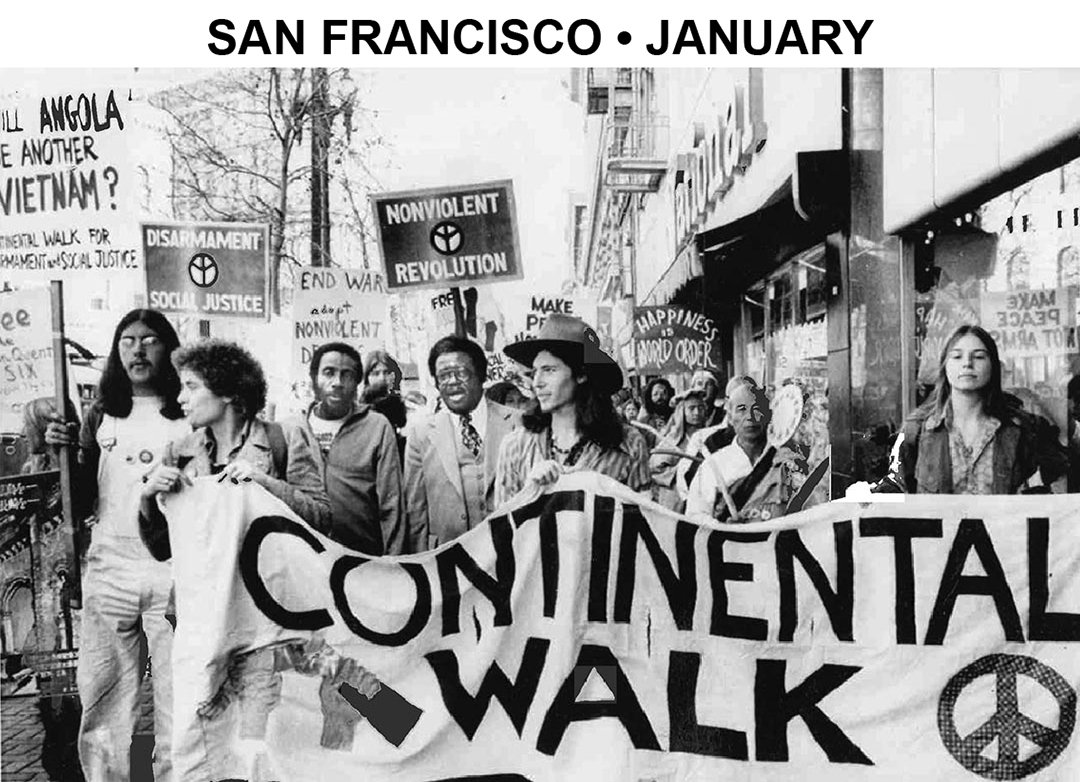
San Francisco to Washington DC
Though the official onset of The Walk began on January 31 in San Francisco, a feeder route of walkers from Ukiah CA started 120 miles north on January 23. And that had been proceeded by a car caravan on January 1, which left from the Canadian-U.S. border heading to Ukiah.
Aside from the Washington DC finale, Bay Area organizers put together the largest and most extensive series of events during the entire Walk. These included an evening of Women’s Culture in San Francisco involving 400, a rally of 800 at UC Berkeley before the Walk crossed the Golden Gate Bridge into San Francisco, and a January 31st rally of 1,000 who took the first steps on that 3,700-mile trek to Washington, DC. About 300 of the initial 1,000 marchers walked the entire nine miles on that first day through the city.
FEEDER ROUTES
Canada/U.S. border to Ukiah CA [driven]
Spokane WA to Portland OR [driven]
Ukiah CA to San Francisco
Concord CA to San Francisco
Mexico/U.S. border to San Diego
San Diego to Riverside [driven]
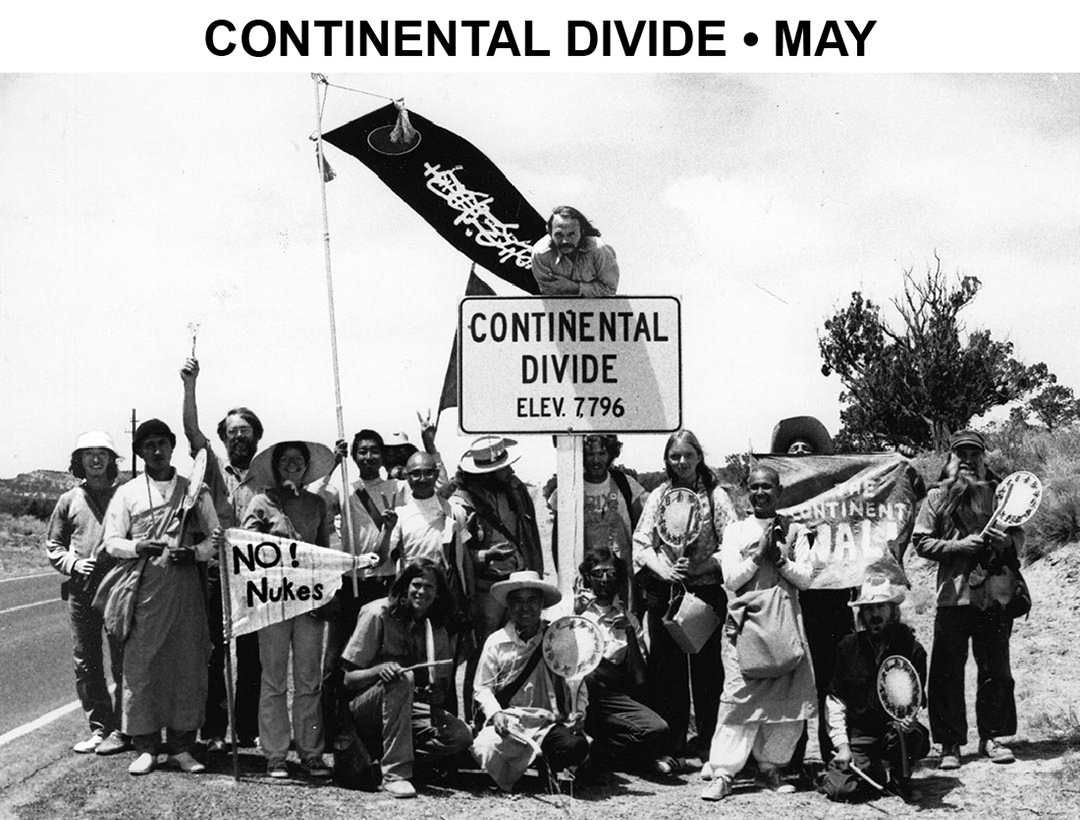
Boulder/Denver to Los Alamos NM
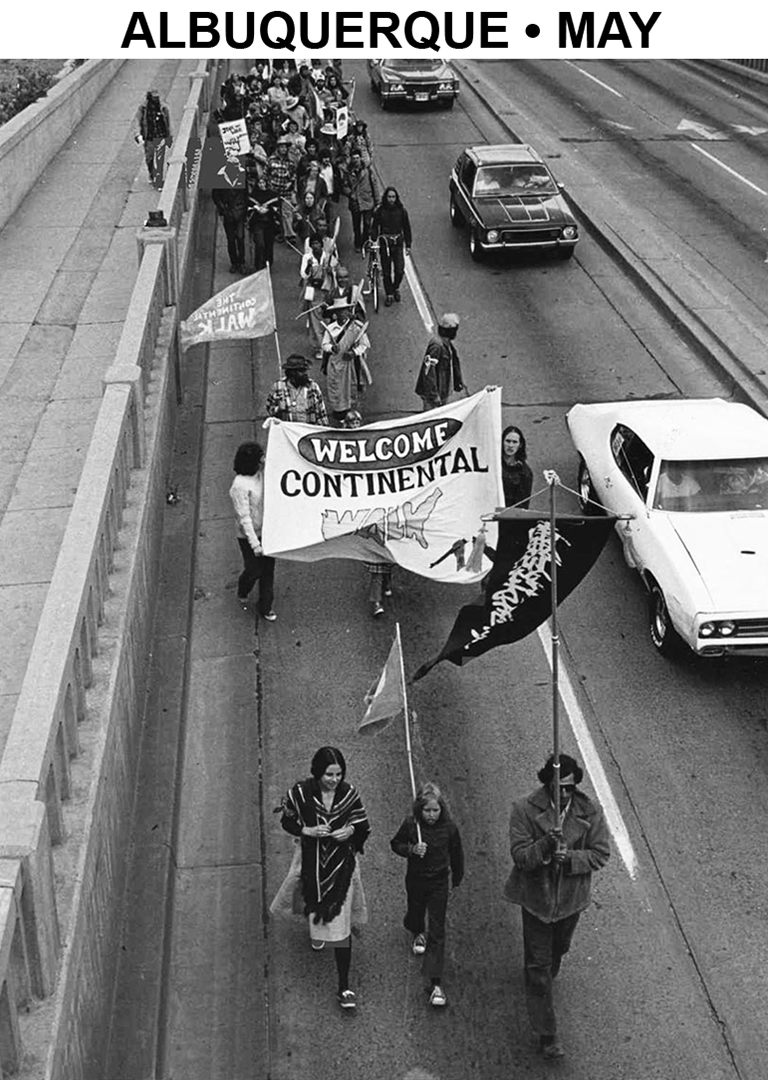
Santa Fe to Albuquerque [driven]
Lincoln NB to Bloomington IL
Stillwater/Minneapolis MN to Chicago
Muncie IN to Ft. Wayne IN
Syracuse NY to Niagara NY
Canada/Niagara NY border to Cleveland
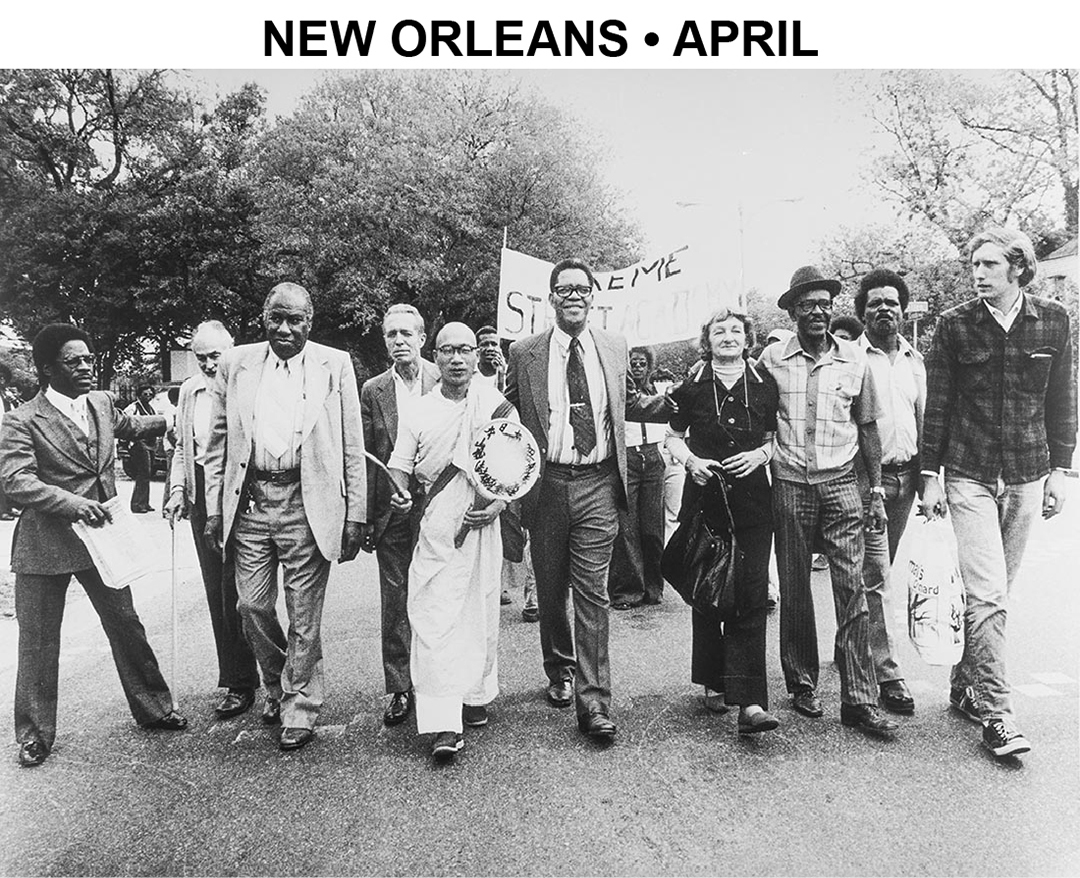
New Orleans to Washington
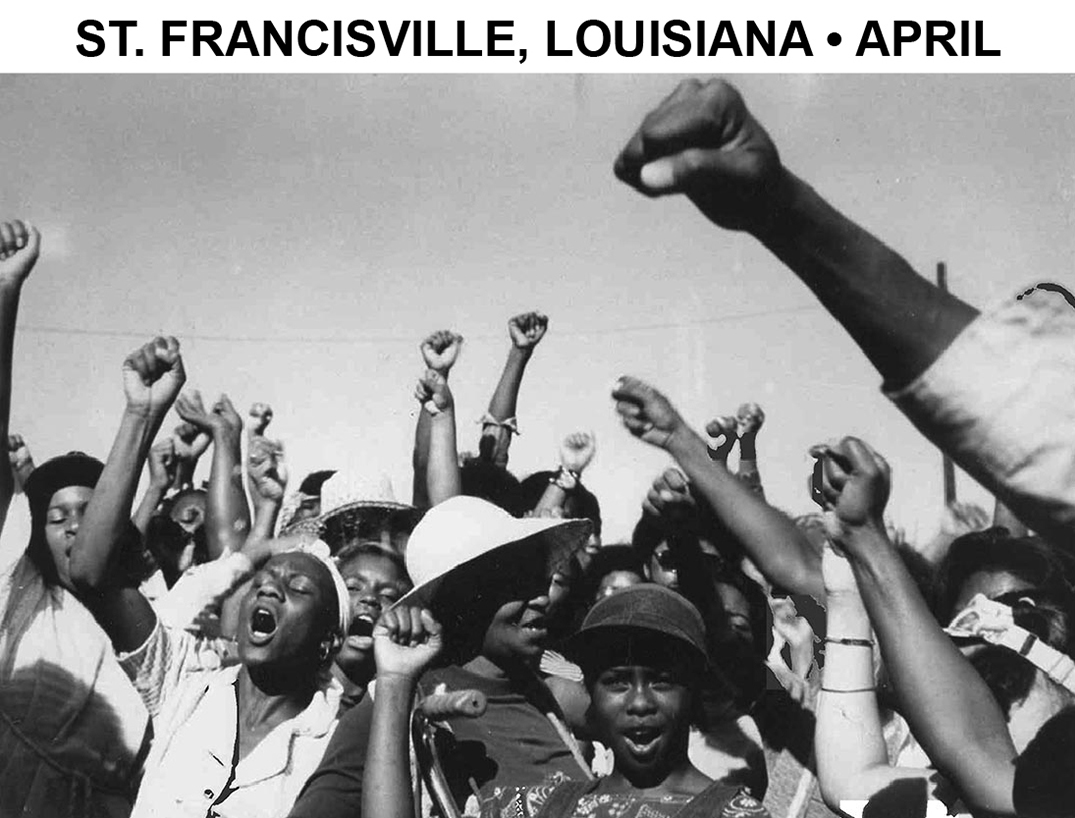
On April 5th, the day after observances on the eighth anniversary of Martin Luther King, Jr.’s assassination, the SCLC-organized southern route stepped off from Dillard University.
Over the next six months the route passed through seven states on its way to Washington, including some very conservative areas harboring still-active KKK strongholds. Through much of the walk, SCLC chapters were expected to provide at least 10 walkers through their areas. While walkers always marched through downtowns, sometimes routes between them were driven.
Walkers were frequently harassed, even including being arrested by police six times attempting to walk into some downtowns, and the late-night torching of a car belonging to supporters.
FEEDER ROUTE
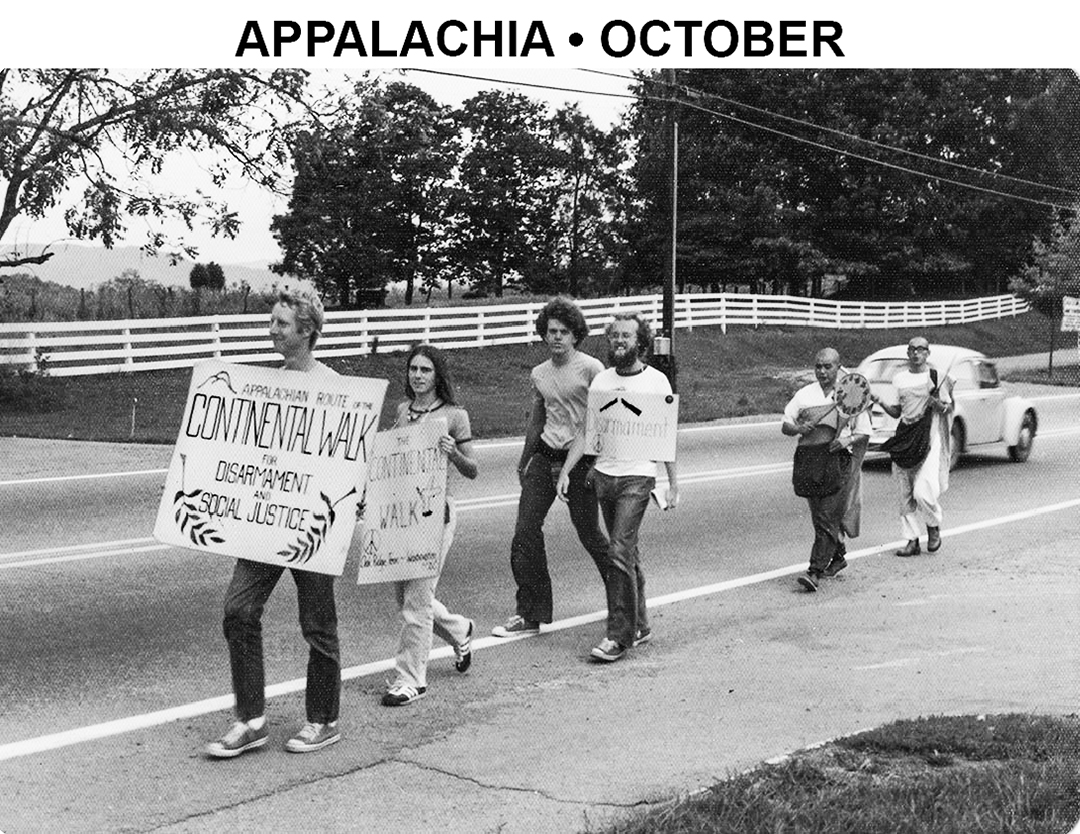
Oak Ridge TN to Fredericksburg VA
on 6-week 500+-mile Appalachian route
Boston to Washington
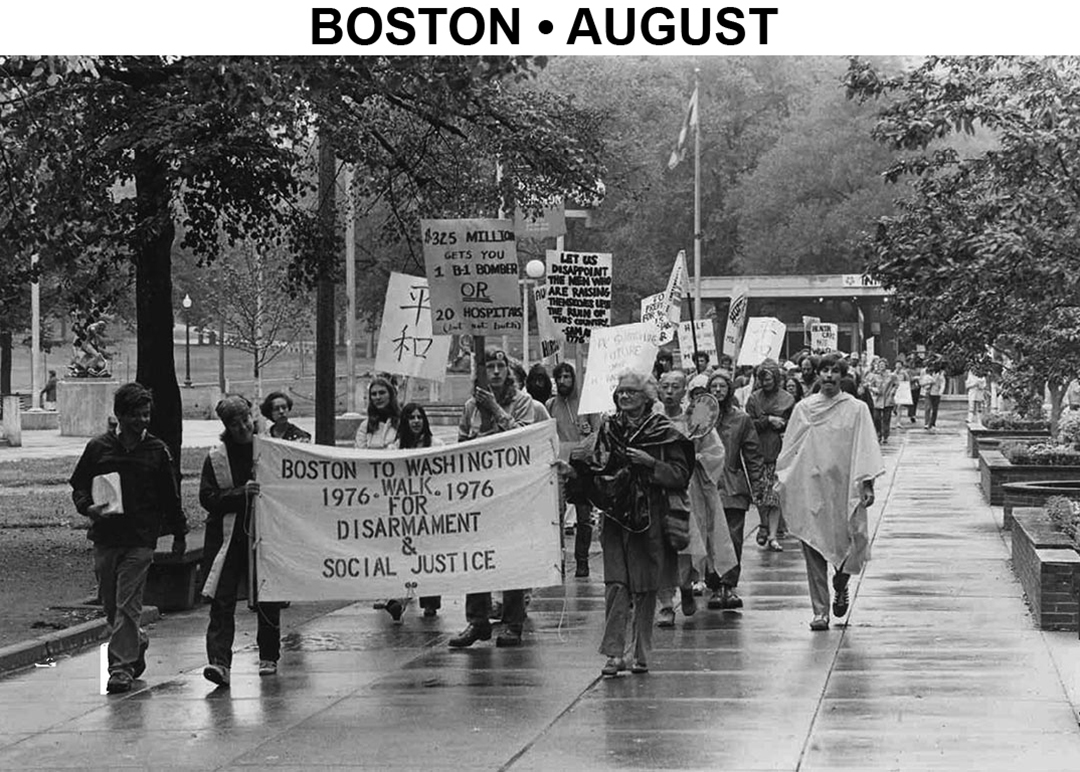
The Boston to Washington route kicked off on August 7th with 100 rain-soaked marchers. The day before a series of Hiroshima Day events was held, including a vigil of 150 people at Boston’s Government Center. Joining that vigil were walkers on a 50-mile Worcester to Boston feeder route that had started three days before. That evening 200 people attended a forum at Faneuil Hall.
The 500-mile Boston to Washington route went through the largest and densest population centers of all the Walk routes.
FEEDER ROUTES
Worcester MA to Boston
Brattleboro VT to New Haven CT
Saratoga NY to New York City
Stony Brook NY to New York City
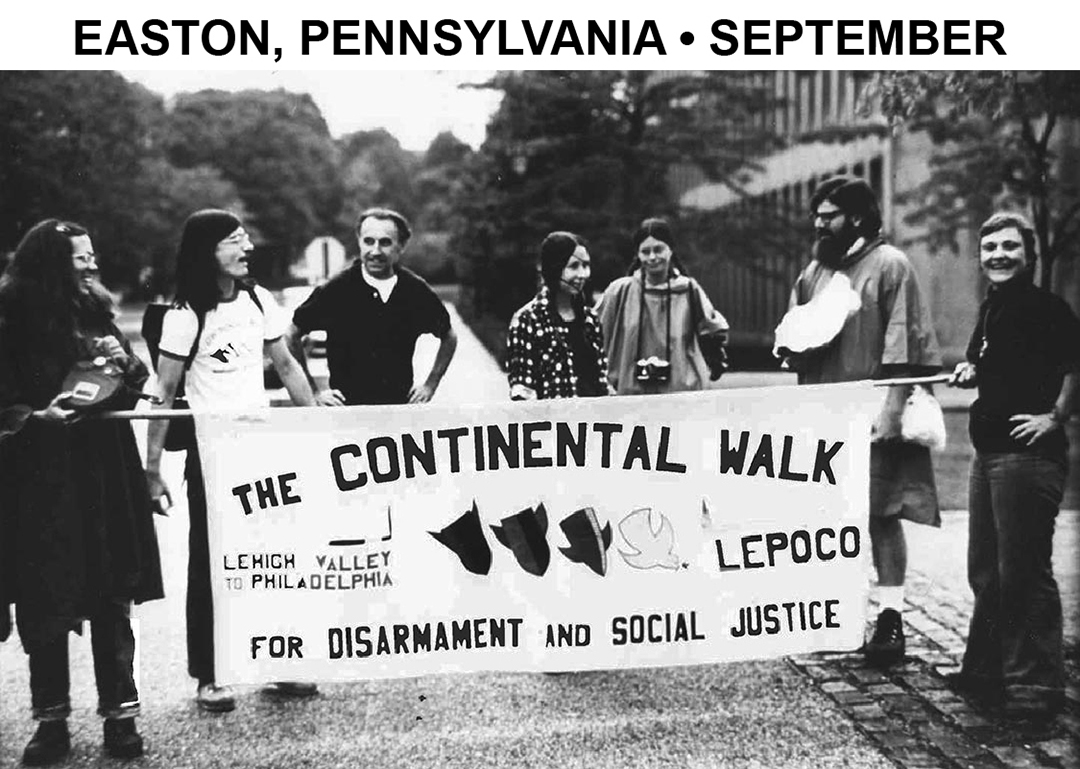
Bethlehem PA to Philadelphia
Harrisburg PA to Baltimore
Unconnected Routes
Regional and local activists in some areas too distant to connect with the main routes managed to organize shorter walks and, in a number of cases, even ones just through their downtown.
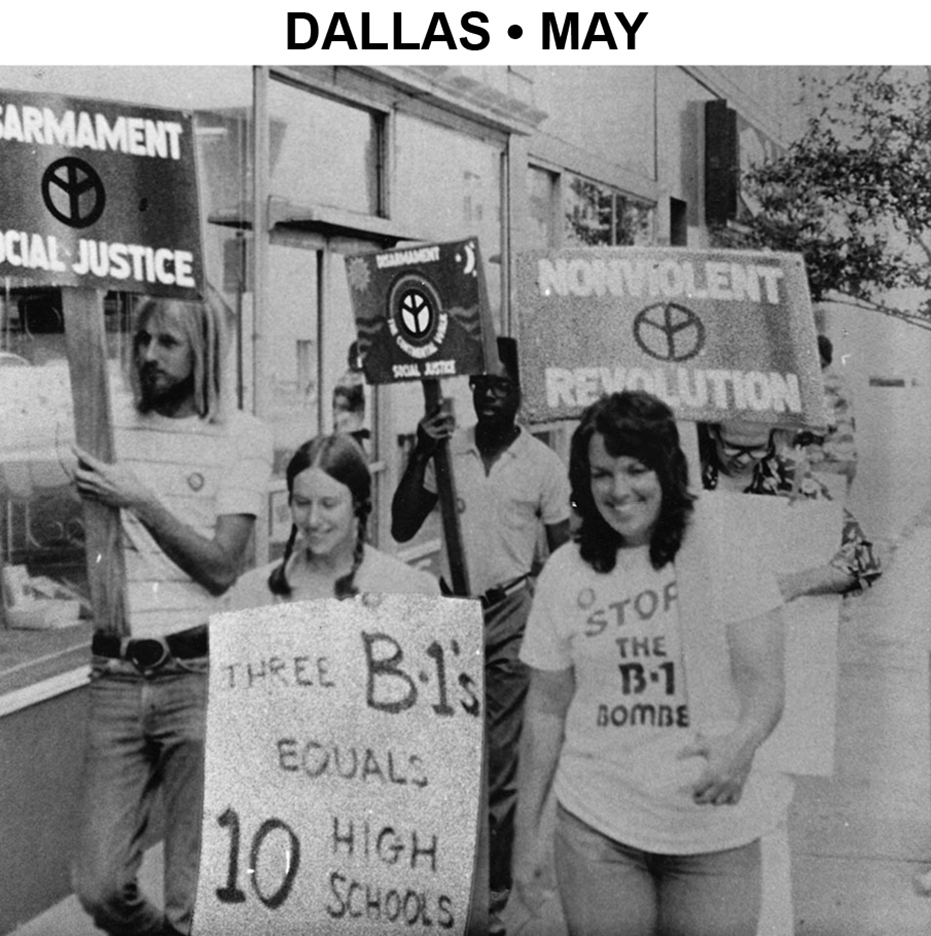
- TEXAS: Glen Rose to Dallas walk
- INDIANA: Evansville to Bloomington walk
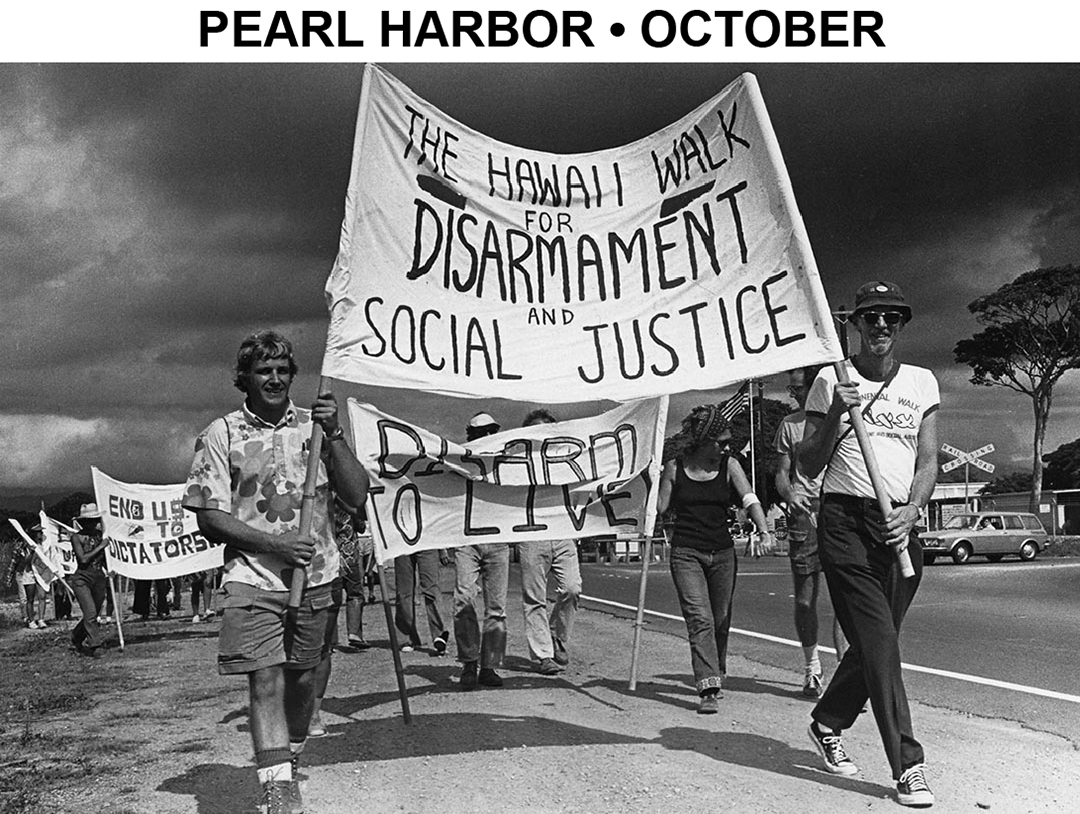
- HAWAII: Pearl Harbor to Waikele walk
Whether the routes had three walkers or a thousand, they provided convenient opportunities for organizers in local communities to create events highlighting peace and social justice issues most relevant to them.
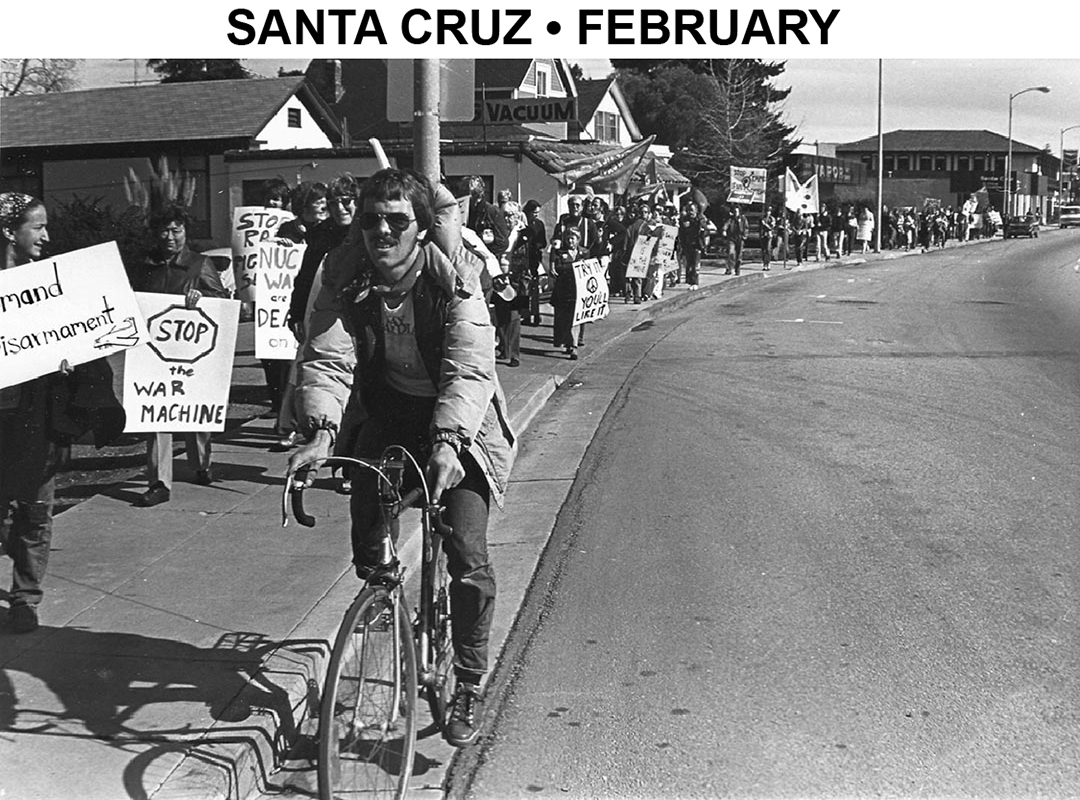
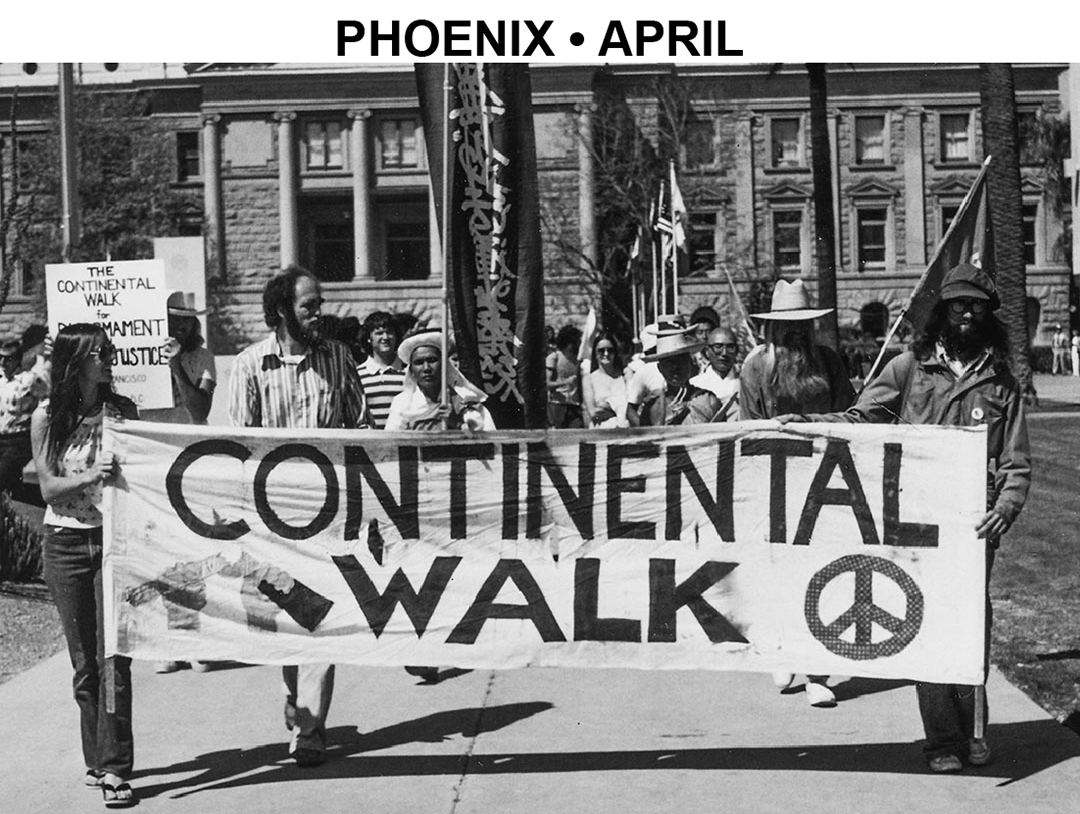
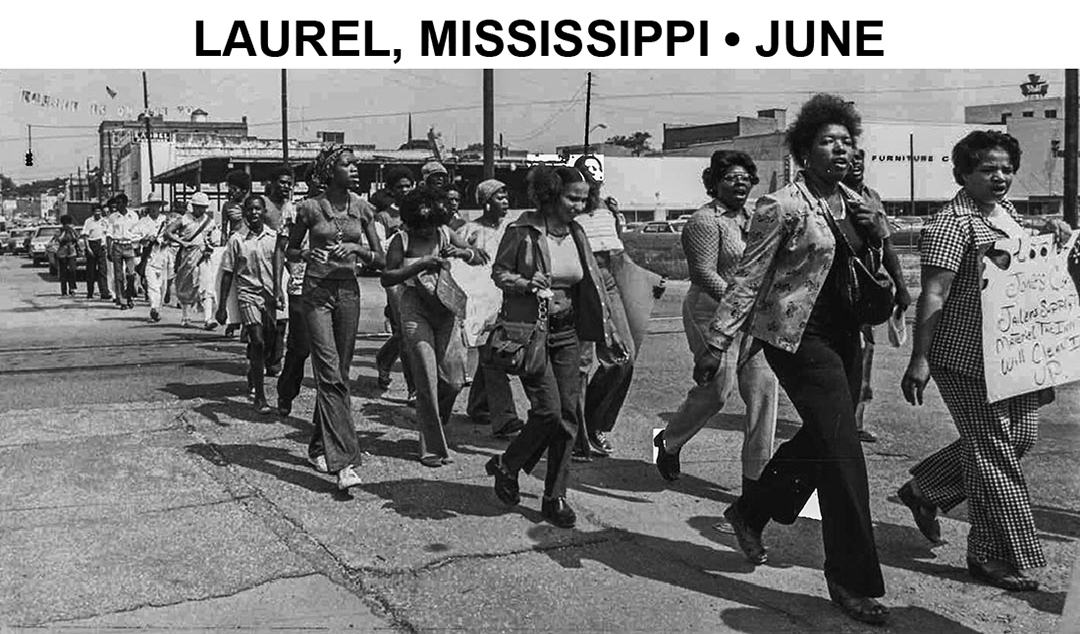
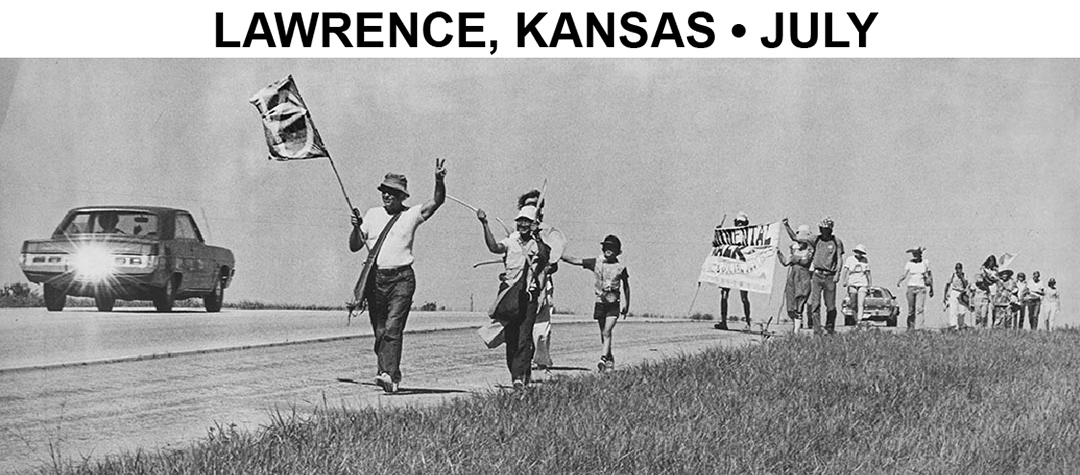
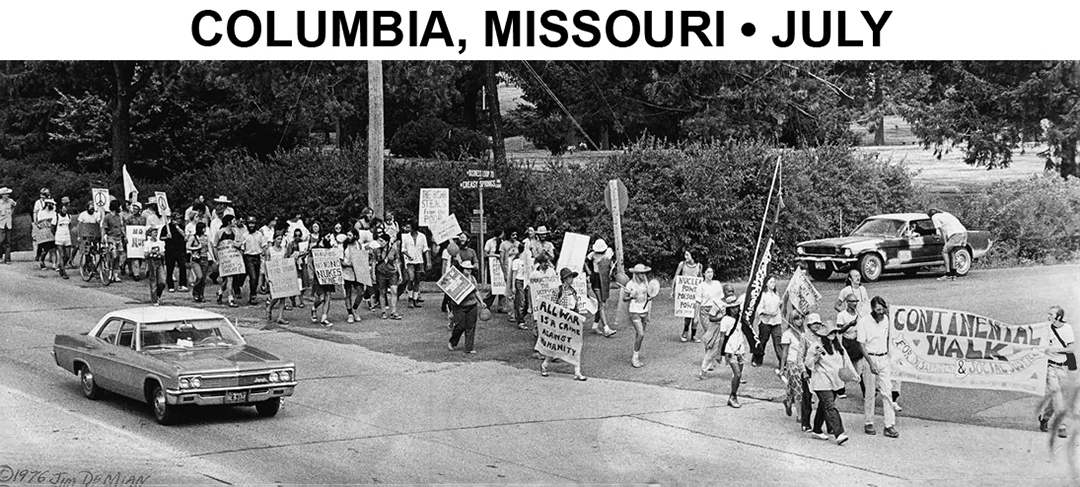
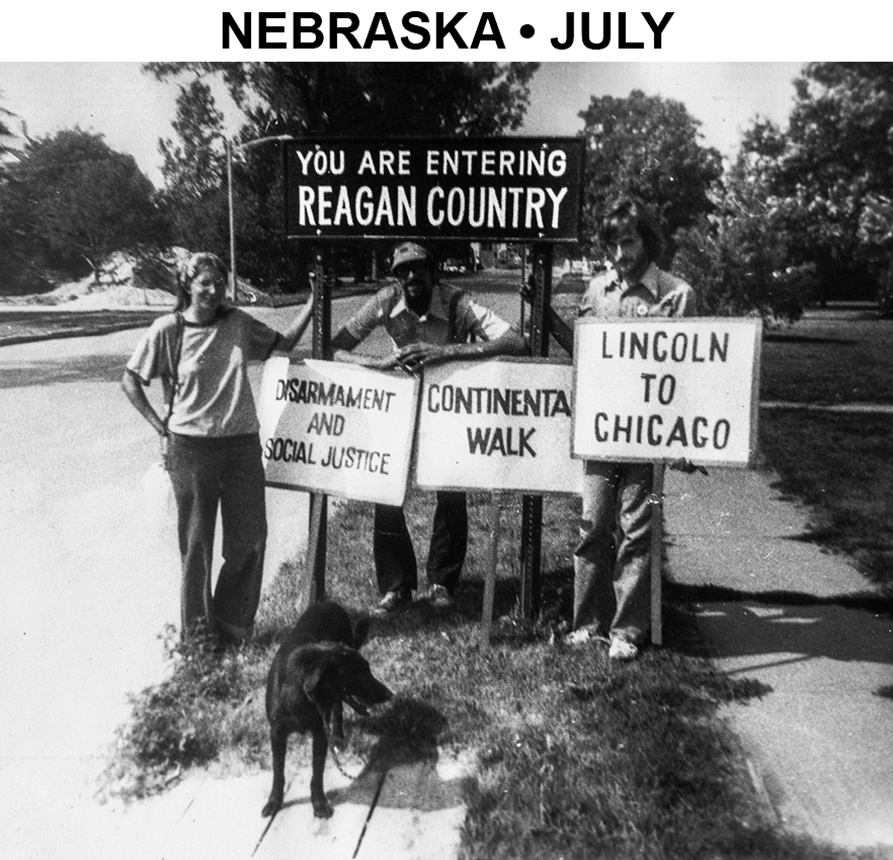
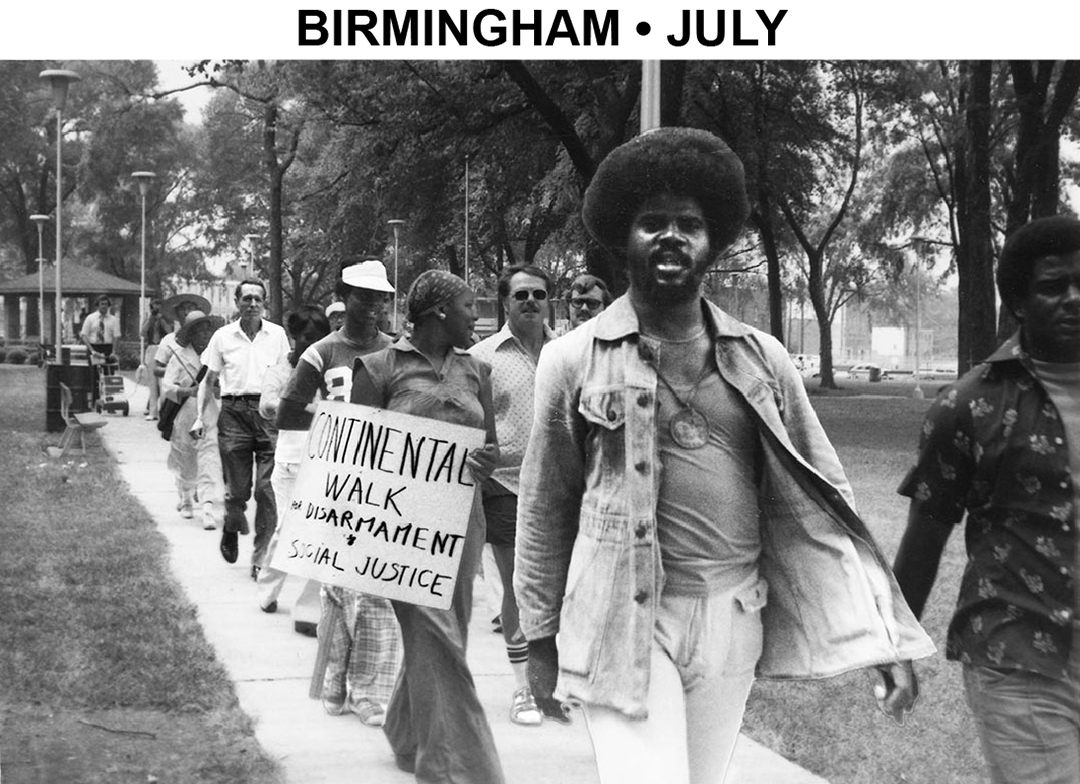
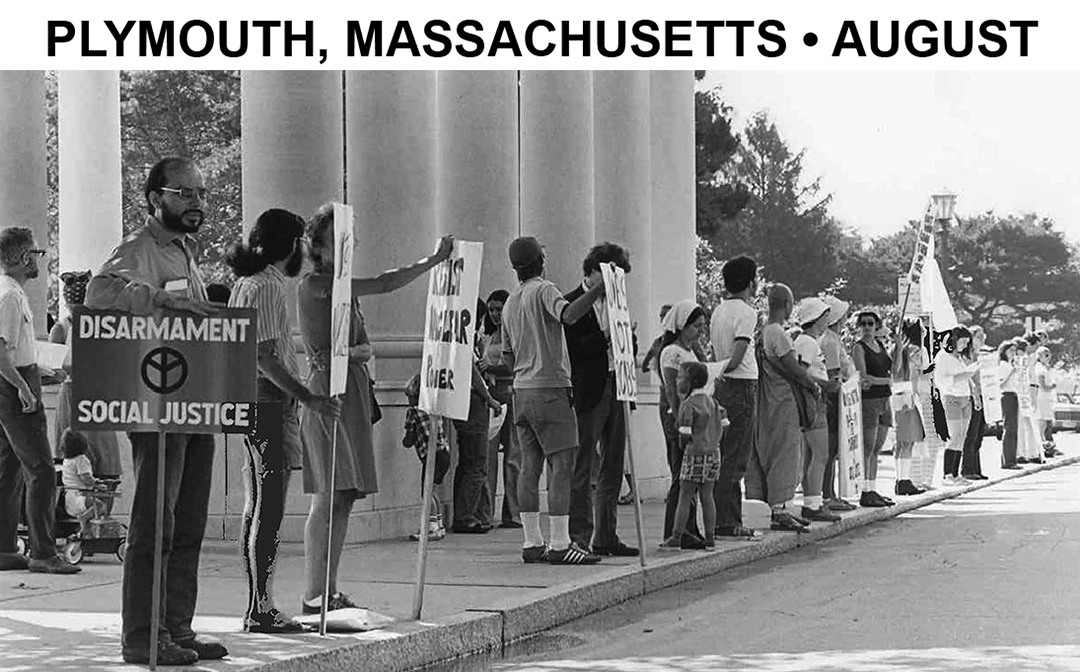
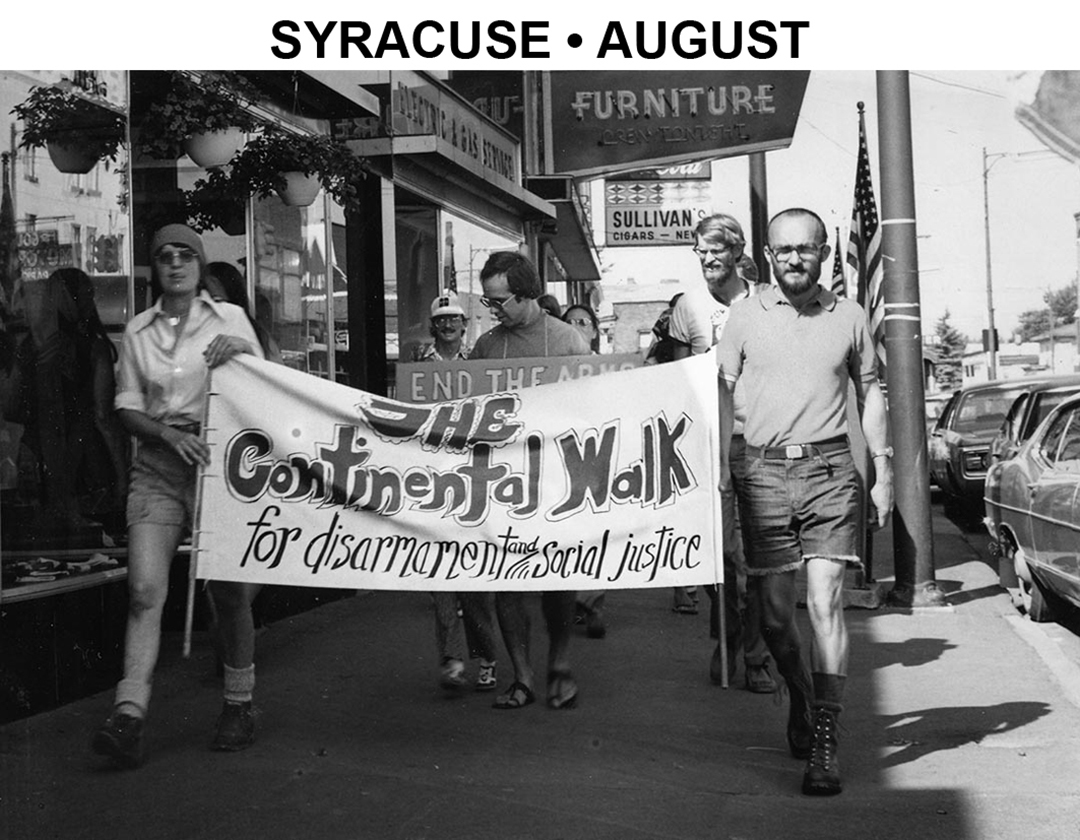
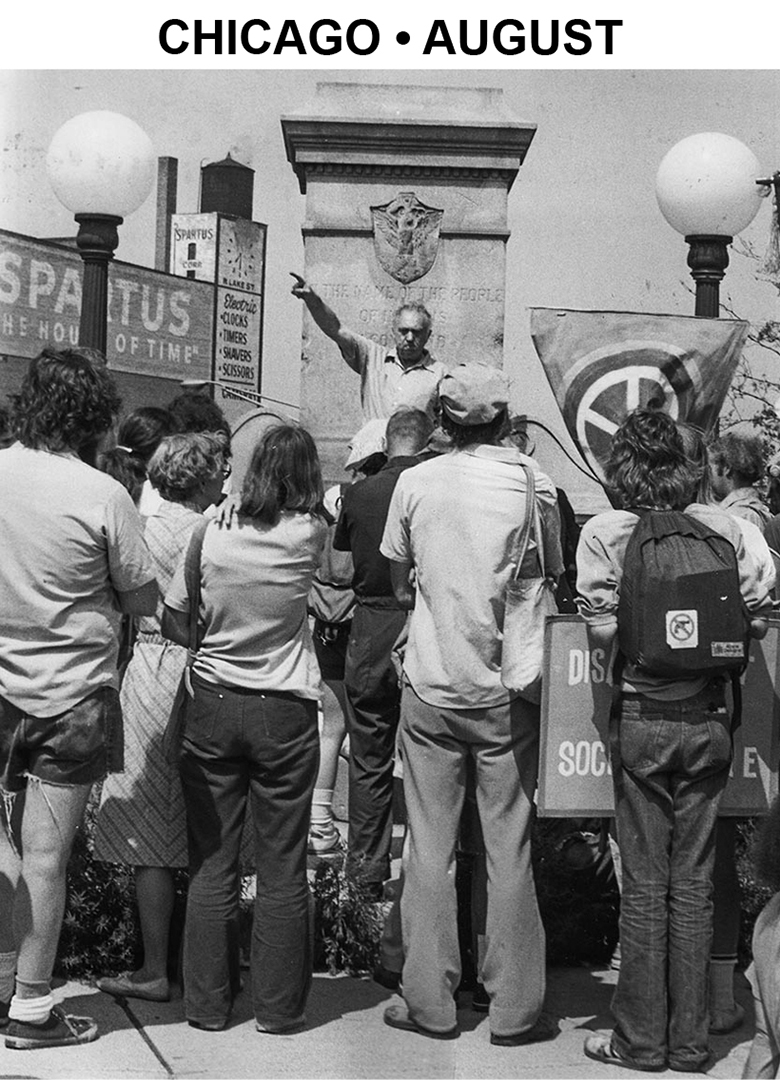
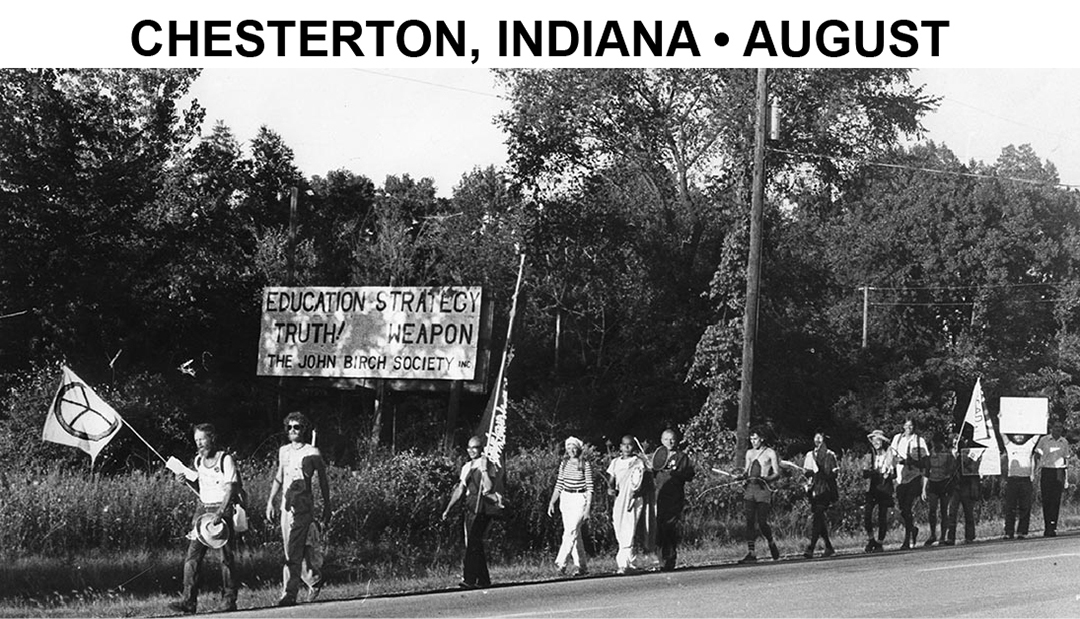
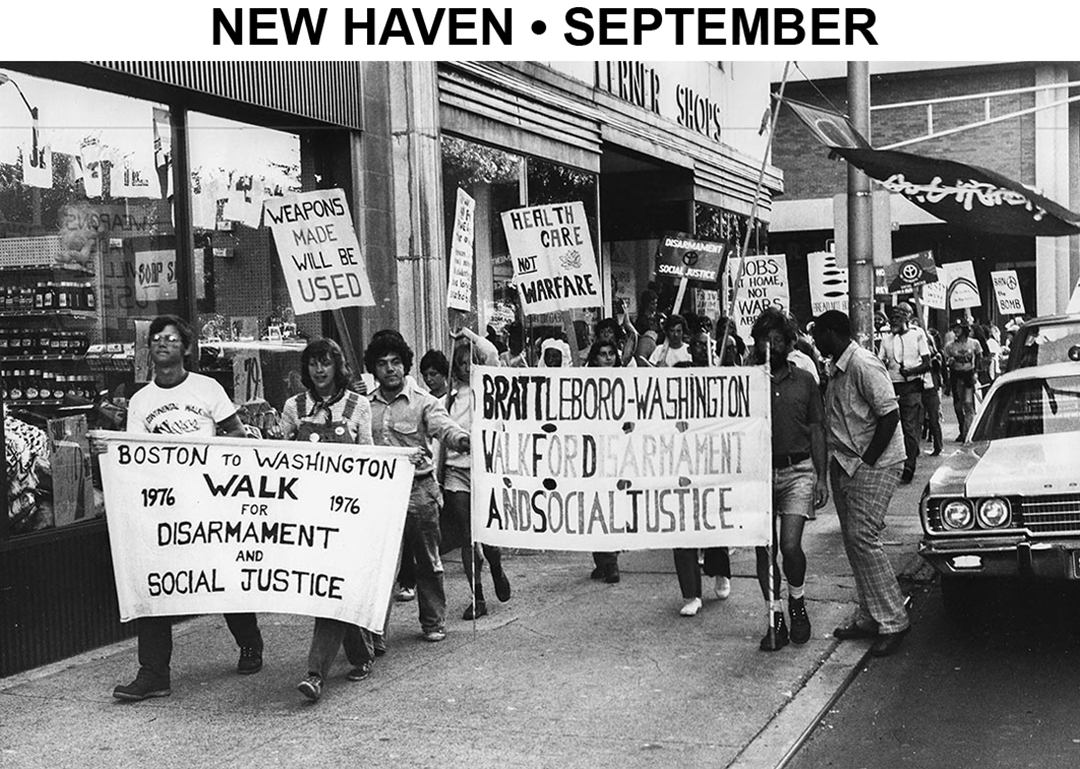
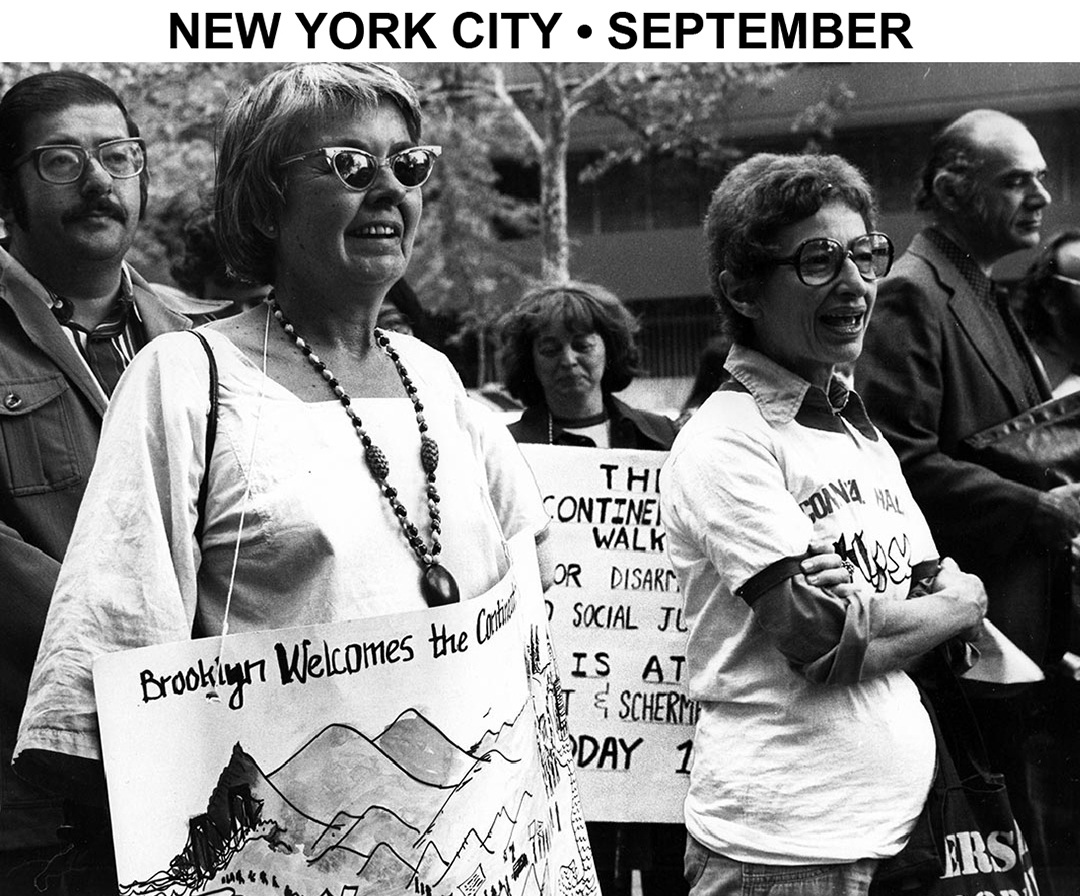
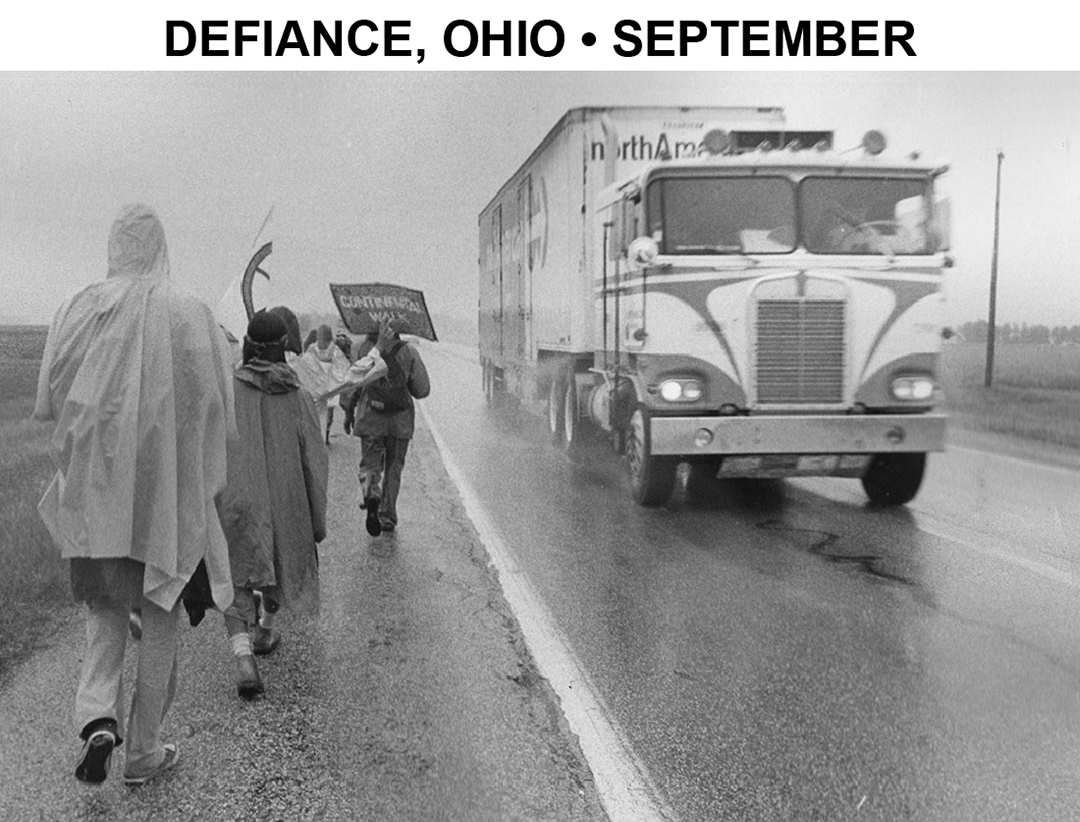
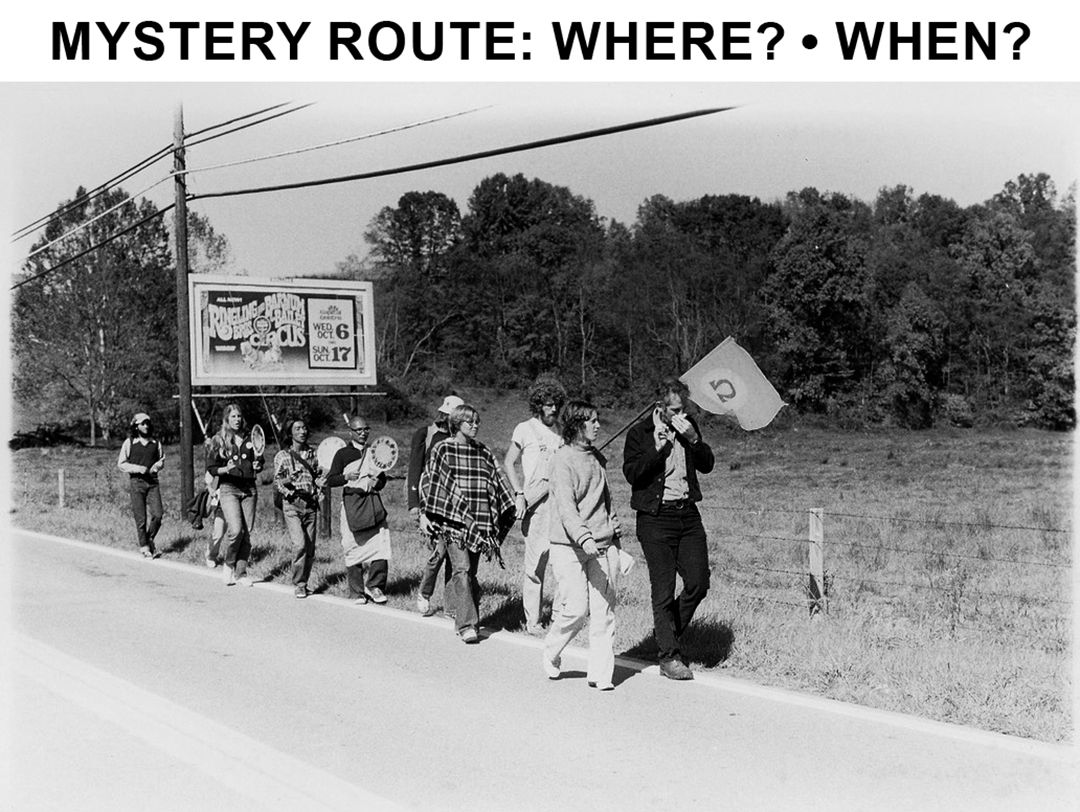
Pictured below is a small sample of photos out of the hundreds of cities and towns crossed by The Walk (click on photos to enlarge).
Second in a Series of 7 blogs
Ed Hedemann was the national coordinator for The Walk (1975-1976) and WRL national staff member (1973 to 1986)
Share