“More Creativity Not War”: Origins of a Classic WRL Poster
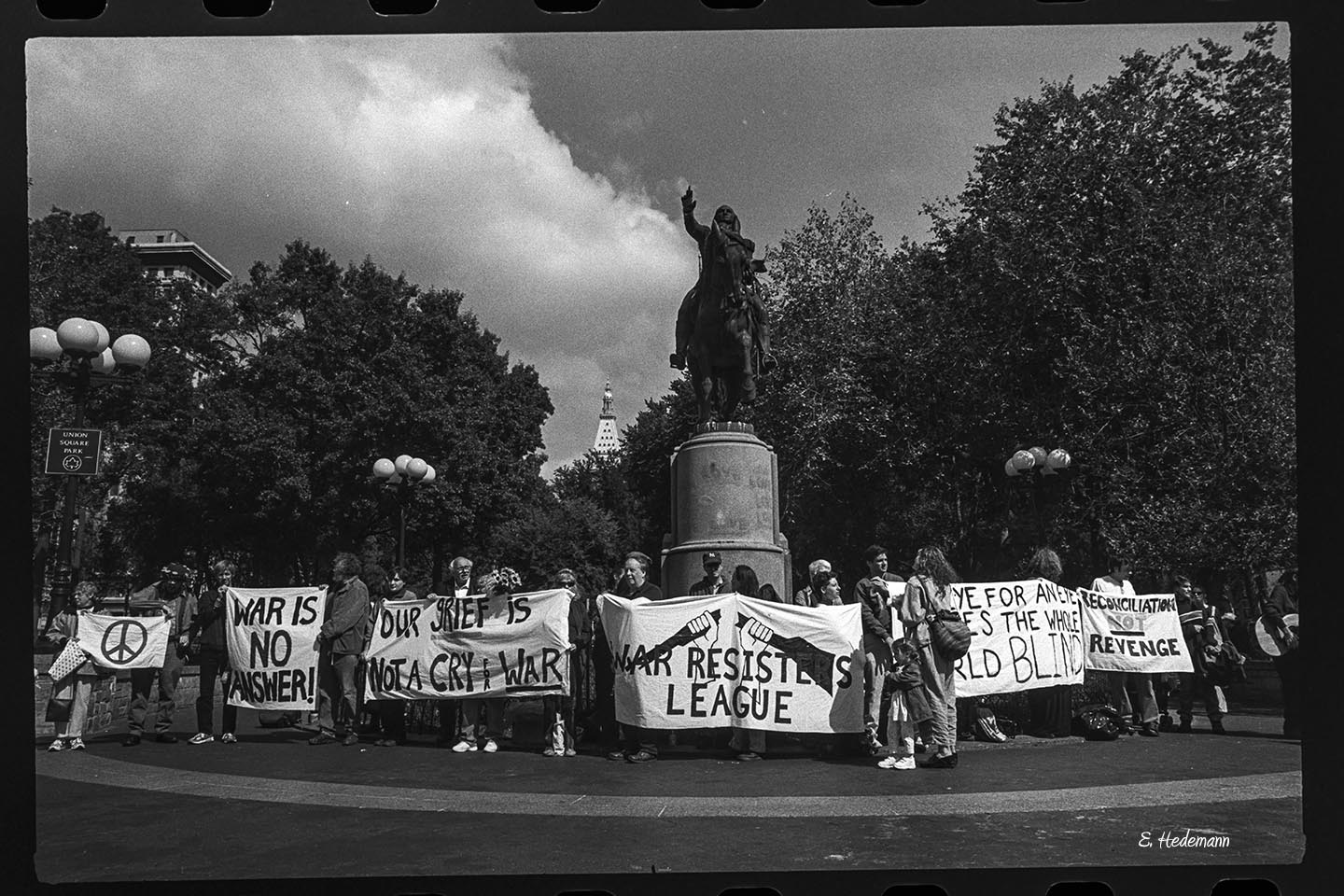
After the September 11, 2001 attacks, President George W. Bush and the U.S. government quickly sought revenge on Afghanistan even though Afghan people had nothing to do with the attack. WRL immediately issued a statement drafted by David McReynolds and, along with many other peace groups, organized vigils opposing the country’s blood lust. This activity not only turned out thousands of longtime peace activists but also attracted many who had never before been involved in antiwar activities.
Among them was a young NYC graphic artist* who was working in a commercial PR firm. After I recently was able to track him down, he recalled feeling the need to work for peace, so on his first day returning to work after 9/11, he commented to co-workers that the United States shouldn’t nuke the entire Middle East because of these attacks. An executive with the PR firm, after hearing about his views, confronted him, physically pushing him to the floor and yelling at him. Though the designer reported this to firm’s HR department, he was let go within a few weeks.
Later that September he attended a peace vigil in Union Square, then discovered WRL on the Internet. He stopped by 339 Lafayette Street and met with Carmen Trotta and David McReynolds offering to design an antiwar poster for WRL.
Using a computer graphics program, he “started with several fonts, altering each character to achieve the desired weight and relationship between characters and to achieve the knock out effect from the color block on the bottom” designing the now classic WRL poster that reads “More Creativity Not War.”
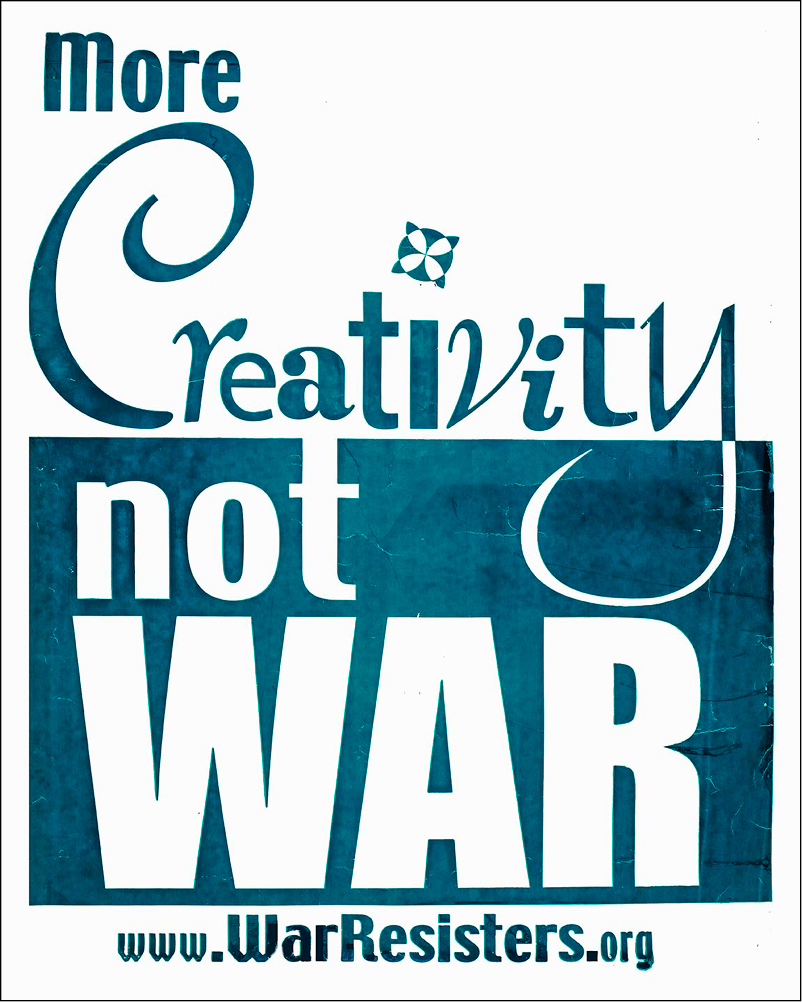
After the design was transferred to silkscreen and stretched onto a frame, posters were printed on both card stock and newsprint at a Catholic Worker work party, producing a few hundred during that session. The newsprint posters were wheatpasted around the city and the card stock posters were first carried during the October 7, 2001, Union Square to Times Square march and rally, coincidentally the same day the United States attacked Afghanistan, launching its seemingly endless “War on Terror.”
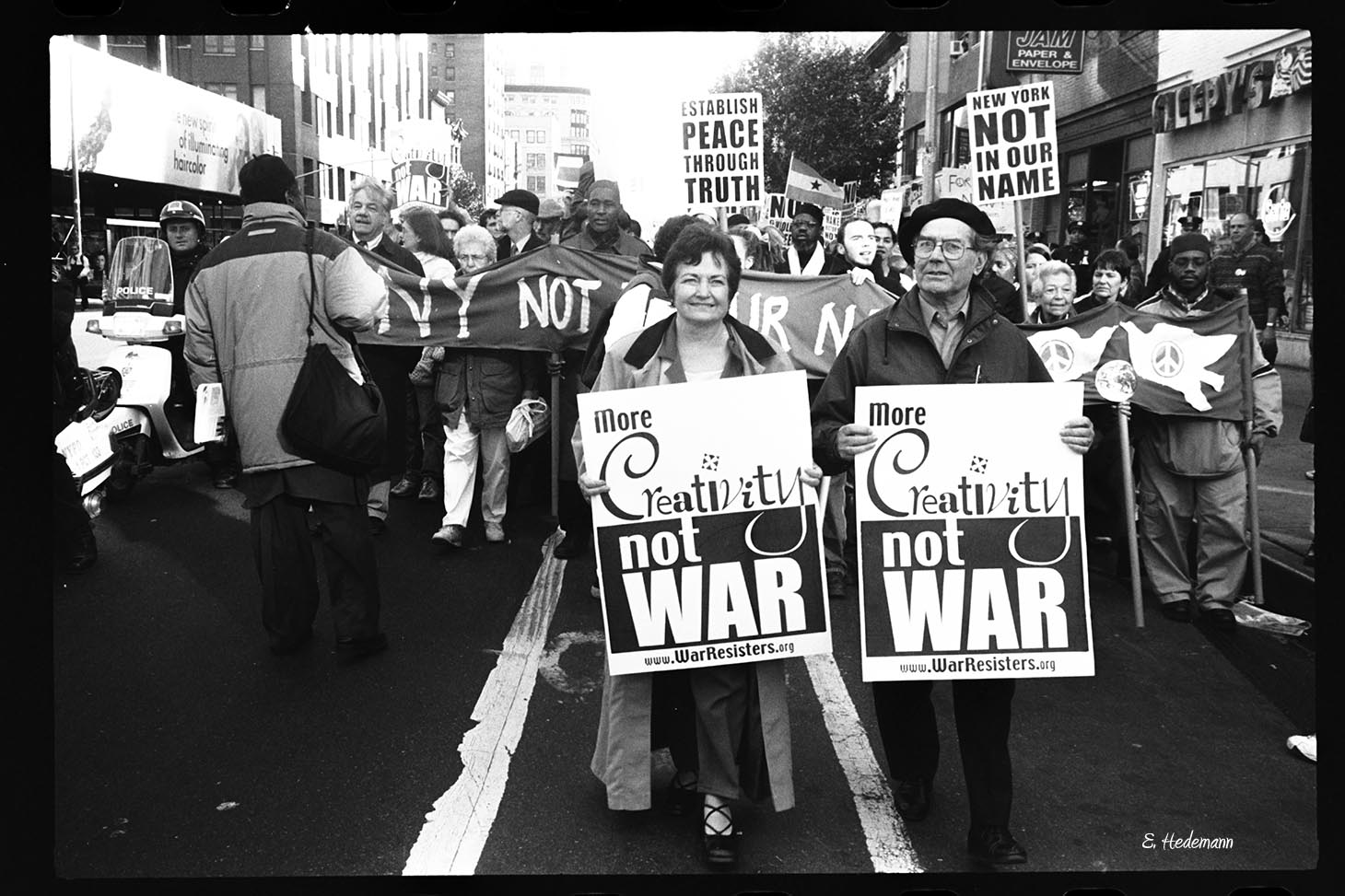
Besides Frida Berrigan, who remembers dispatching wheatpaste teams and “doing it myself; it was so scary and fun!,” the young designer also recollects working with Carmen Trotta among other volunteers at that work party, commenting “The War Resisters League and the Catholic Worker made a big impression on me. I had never been involved with institutions like that before and it was inspiring to know there was a chain of dedicated people working together over such a long time.”
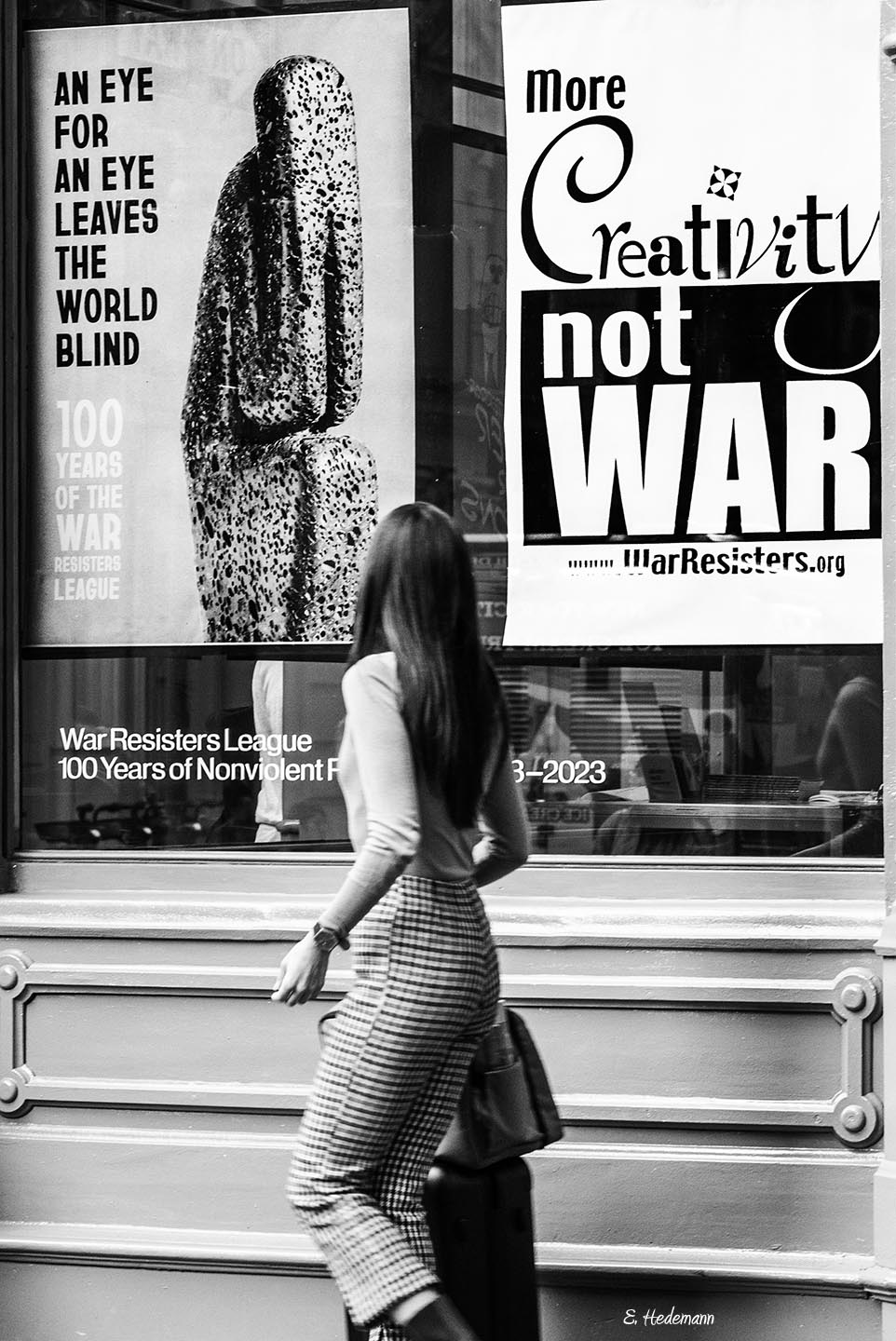
Since the 1960s WRL has produced dozens of posters, both educational and for specific demonstrations, including classics by Peg Averill and, more recently, two posters for WRL’s 2023 100th anniversary. Sadly, the “More Creativity Not War” poster is out of print but vintage copies have been known to turn up from time to time in demonstrations after 2001. Perhaps the original silkscreen and printer is buried somewhere in the bowels of the Catholic Worker’s Mary House?
*he has preferred to stay anonymous
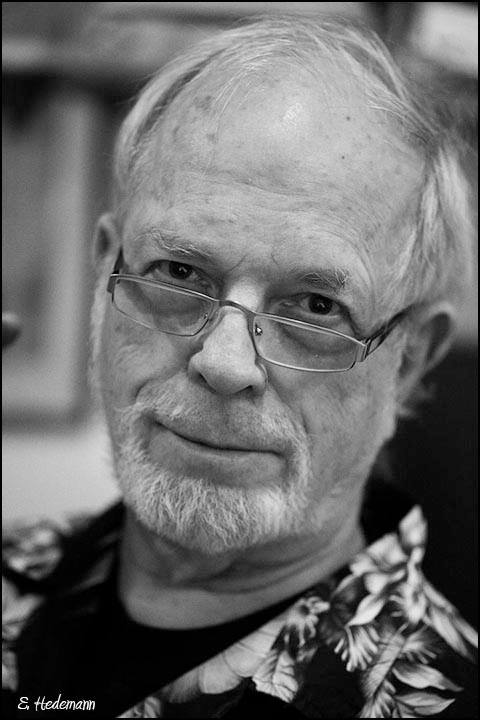
Ed Hedemann was a member of the WRL staff from 1973 to 1986, and currently works with New York City WRL local group.
Share