NATIONAL OFFICE AND ORGANIZING: Reminiscences of The Continental Walk 50 Years Later
Though the heart and soul of The Walk were the walkers, the organizers were the infrastructure or exoskeleton, to continue the anatomical metaphor. While the actual walking took 9 months, the organizing stretched over 23 months.
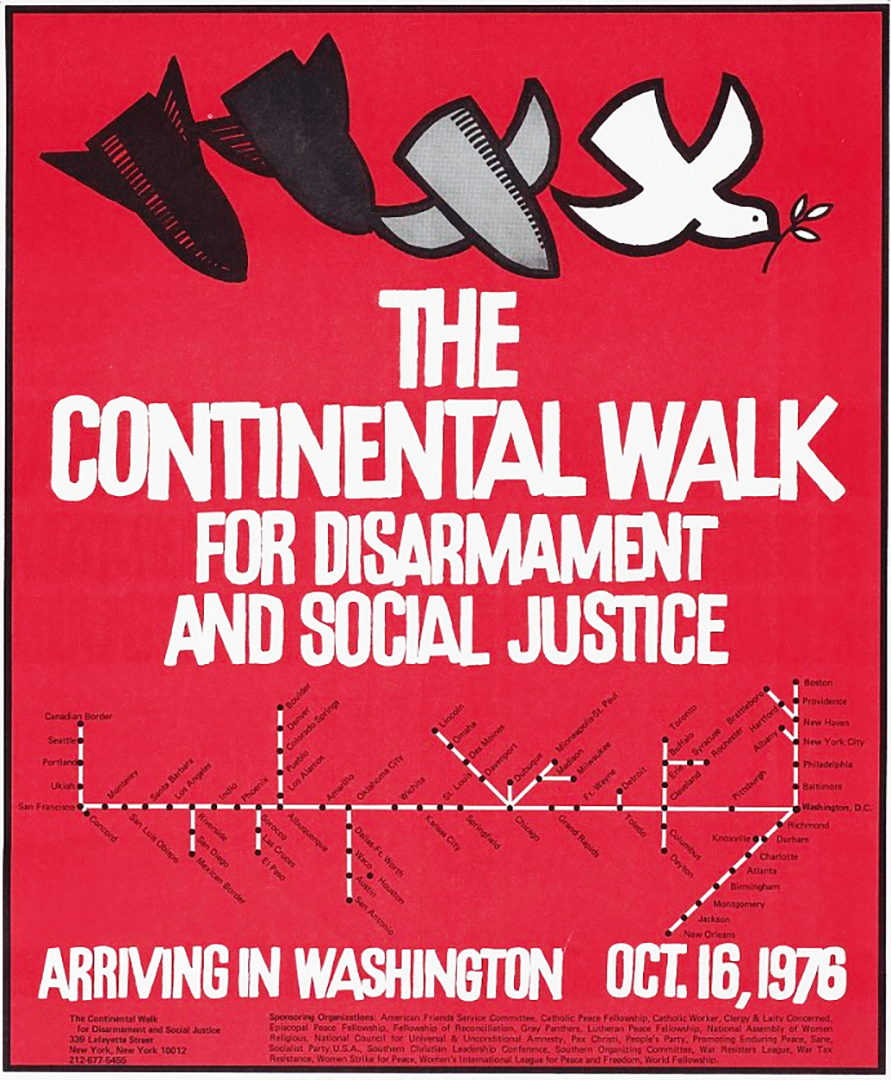
The Walk national office was tasked with fundraising; planning the San Francisco to Washington route; helping to locate community organizers along that route; coordinating the timing and logistics of all the routes; providing nonviolence trainings; producing literature including posters, banners, leaflets, an organizer’s manual; organizing the finale events in Washington DC; troubleshooting unanticipated problems; and promoting and advertising the Walk not only to the public and to the media but also by getting organizations to sponsor and securing endorsements from well-known people.
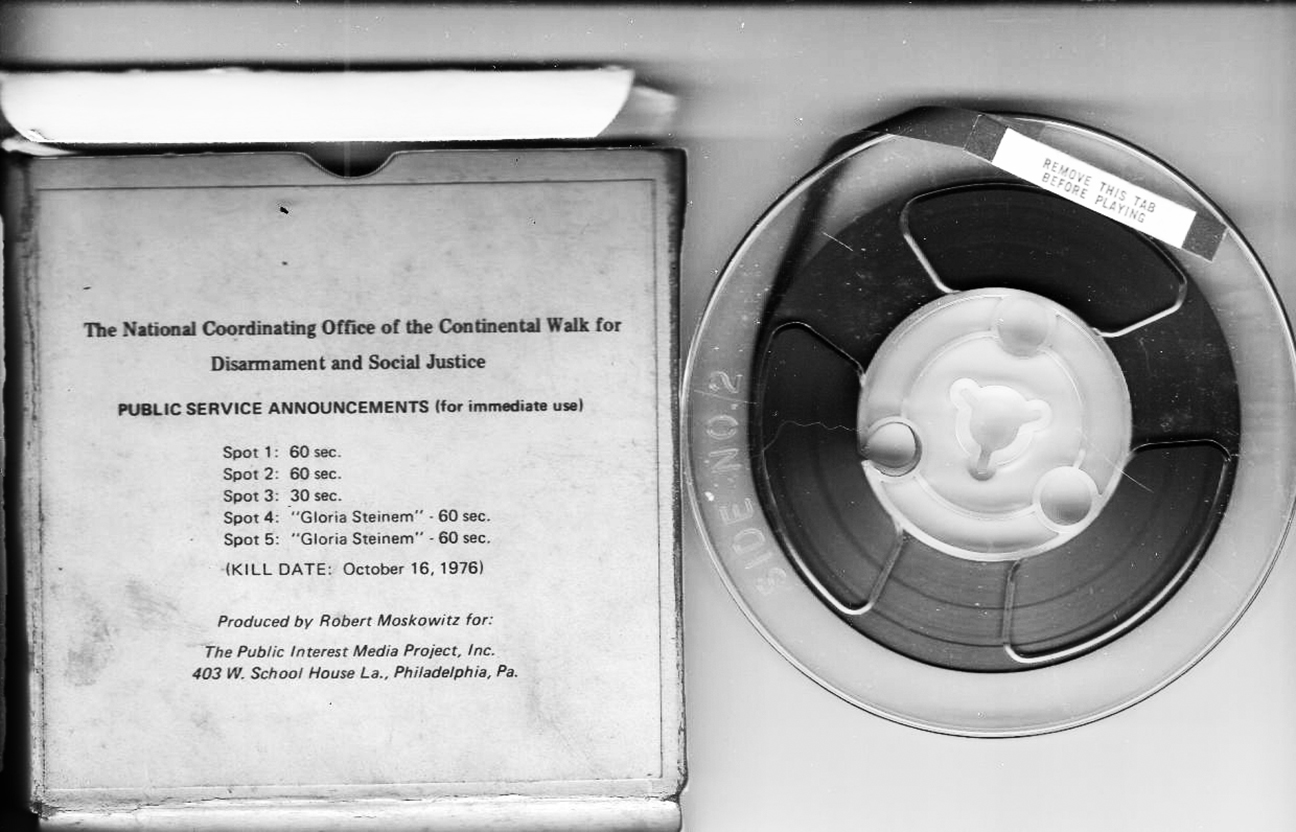
By November 1975, the Walk national office (at 339 Lafayette Street in NYC) was staffed by Joanne Sheehan (part-time loan from Catholic Peace Fellowship), Larry Erickson who was hired full-time by the Walk, and me (full-time loan from WRL). By the March 1976 Blaine Metcalf, after a month walking in California, joined the staff, soon followed by Vickie Leonard, Maureen O’Donnell, and Jim Tindall.

Before any walking began, much of my work entailed visiting other national organizations, including FOR, AFSC, Movement for a New Society, People’s Bicentennial Commission — 1976 was, after all, the 200th anniversary of the Declaration of Independence — for input and their support. There were also field trips to local and regional organizers in Austin, Dallas, Wichita, Kansas City, Columbia, St. Louis, California, Arizona, New Mexico, New Orleans, Boston, and Atlanta.
And I certainly wasn’t the only organizer to hit the road. Joanne Sheehan, Vickie Leonard, Maureen O’Donnell, Gail Pressberg (AFSC), David McReynolds (WRL), William Douthard (WRL), among several other national organizers made field trips.
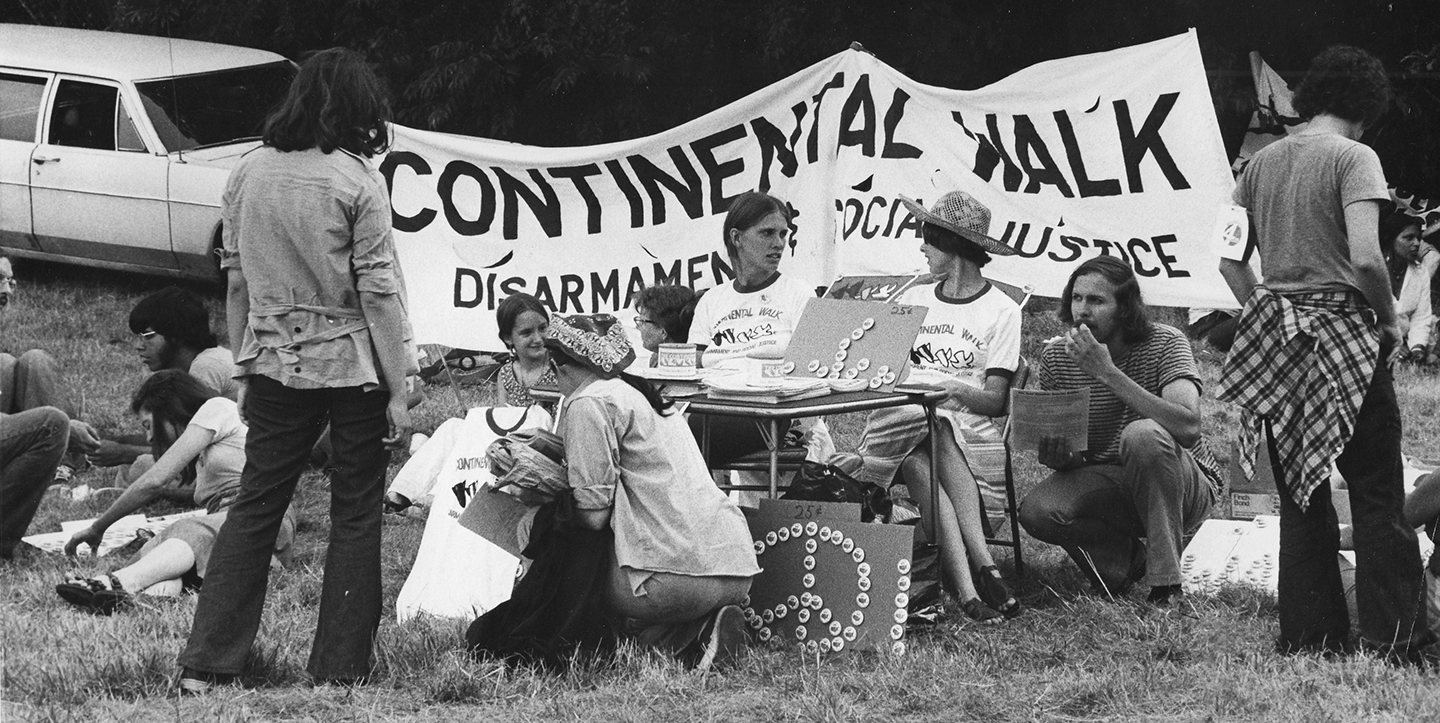
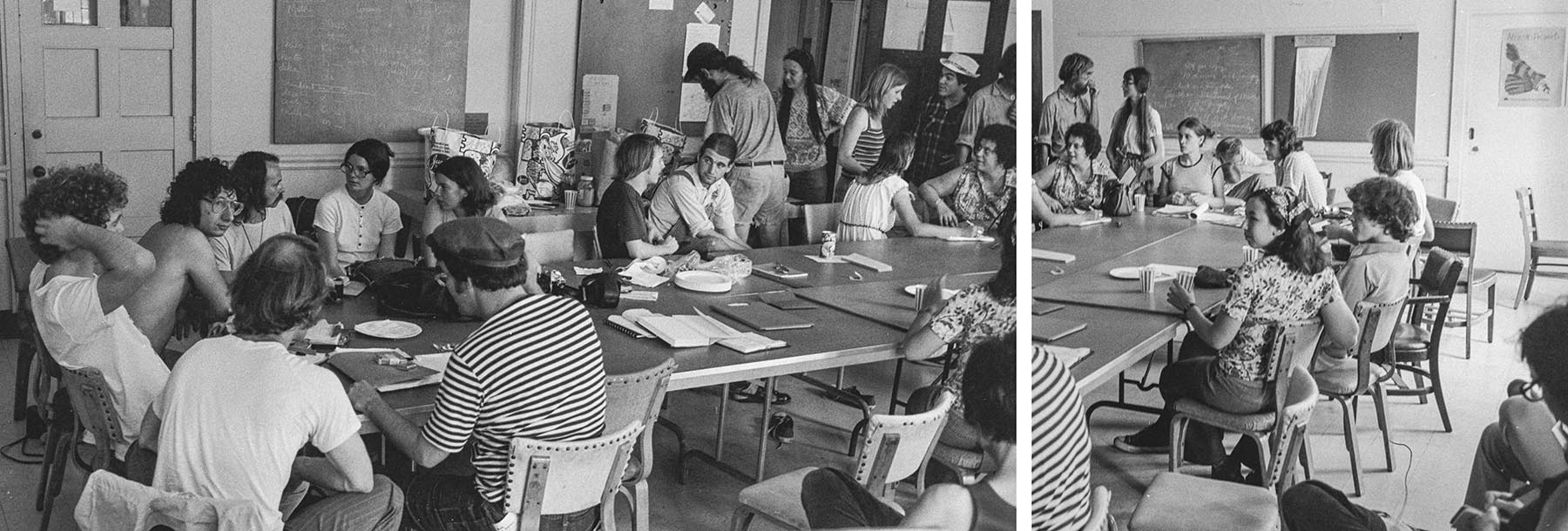
Organizers from around the country would periodically meet to present updates, strategize, and to deal with difficult issues. A mid-June meeting, which also included a few long distance walkers, was held in Chicago to help coordinate and fine tune the eastern half of the Walk as well as begin planning Washington events.
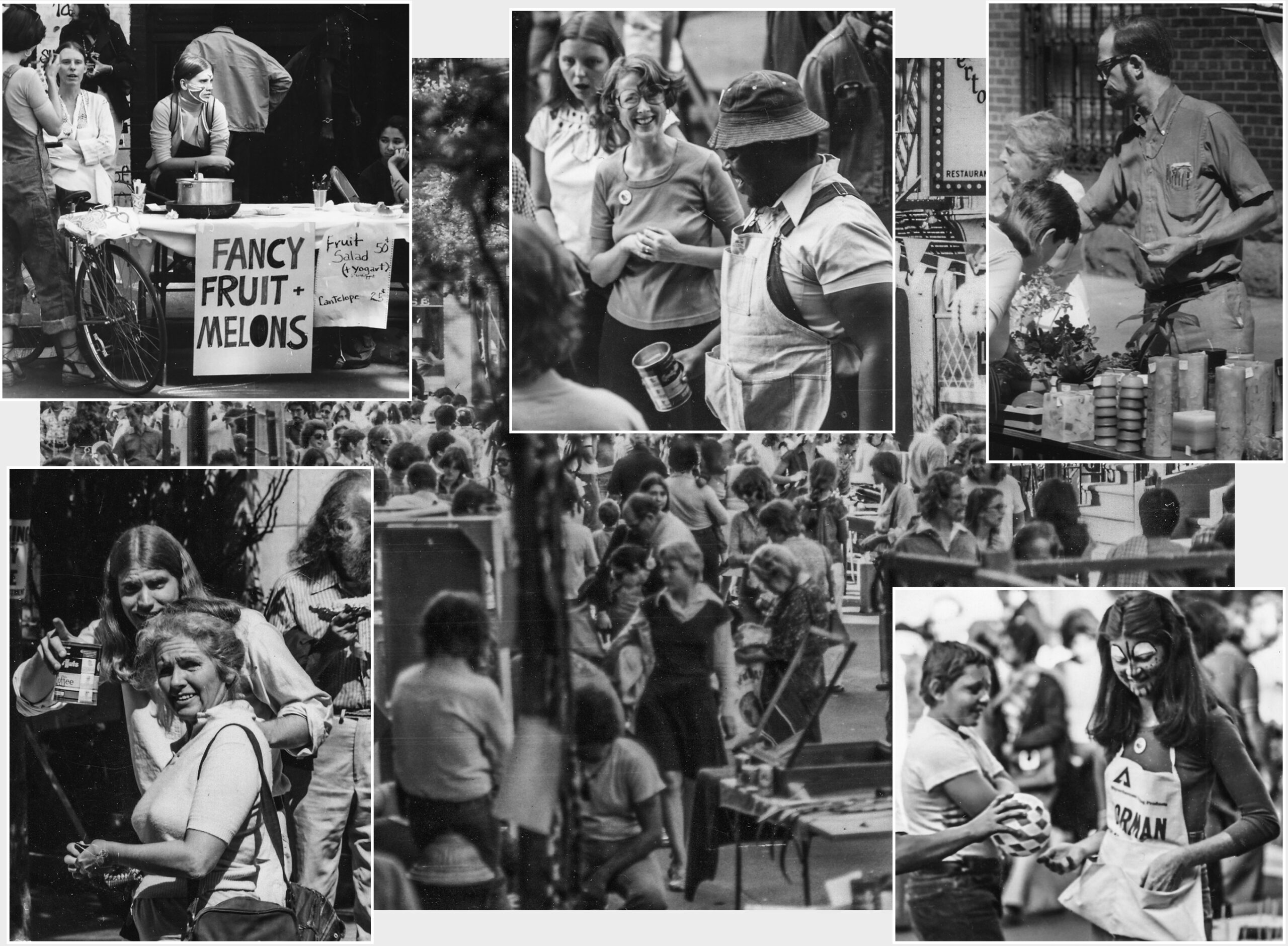
To supplement our more conventional fundraising, on September 12th we held a street fair, which took up an entire Greenwich Village block. The all-day event featured not only literature tables but also many stands of arts, crafts, and food vendors with all the profits going to The Walk. For example, David McReynolds sold homemade scented candles, Maureen O’Donnell did face painting, Vickie Leonard sold fresh fruit, William Douthard oversaw the barbecue pit, while I cooked dessert crêpes.
ORGANIZING THE WASHINGTON FINALE
Six weeks before the mid-October finale, we were able to establish a fulltime, intensive organizing operation to prepare for Washington events. Rep. Walter Fauntroy (D-DC)* made space available in his church, located in DC’s black community. This office was initially staffed by a local organizer from Missouri, two national organizers from the New York Walk office, and a long distance walker from the San Francisco route.
*DC delegate to U.S. Congress, civil rights activist, pastor of New Bethel Baptist Church
By mid-September, I was among eight people working full time and living in a one-bedroom DC apartment. As the different walk routes got closer to Washington, several long distance walkers left to join our frantic organizing effort in DC.
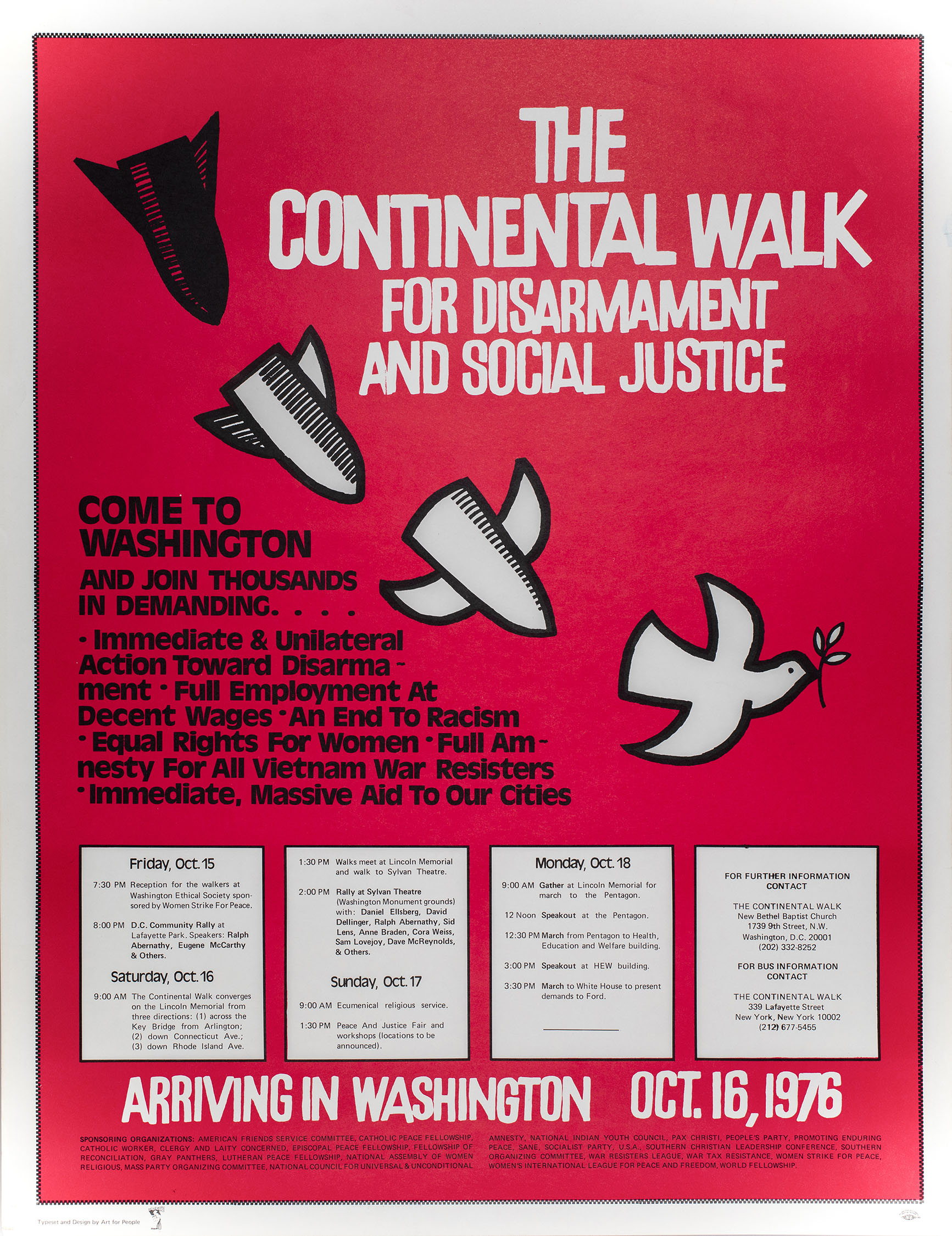
By early October (with only two weeks left), an already exhausted staff of 15 working at least 12 hours a day seven days a week began ‘‘midnight postering parties’’ to reach city residents about a project all but ignored by mainstream media.
Besides overall coordination, among my main tasks in Washington were to meet advertising deadlines and to help secure permits for each of the three main routes crossing through the city, permits for the Sylvan Theater rally, permits for the march from the Lincoln Memorial across the Memorial Bridge past Arlington Cemetery to the Pentagon. [At least that last permit didn’t force us to pass through a grotesque triumphal arch celebrating a pathologically vain wannabe demagogue desperate for it to be erected during this year’s U.S. Semiquincentennial.]
Despite the lack of support from the Federal government, the Council of the District of Columbia unanimously passed a resolution declaring October 16, 1976, to be “Continental Walk for Disarmament and Social Justice Day.”
SPONTANEOUS ORGANIZING
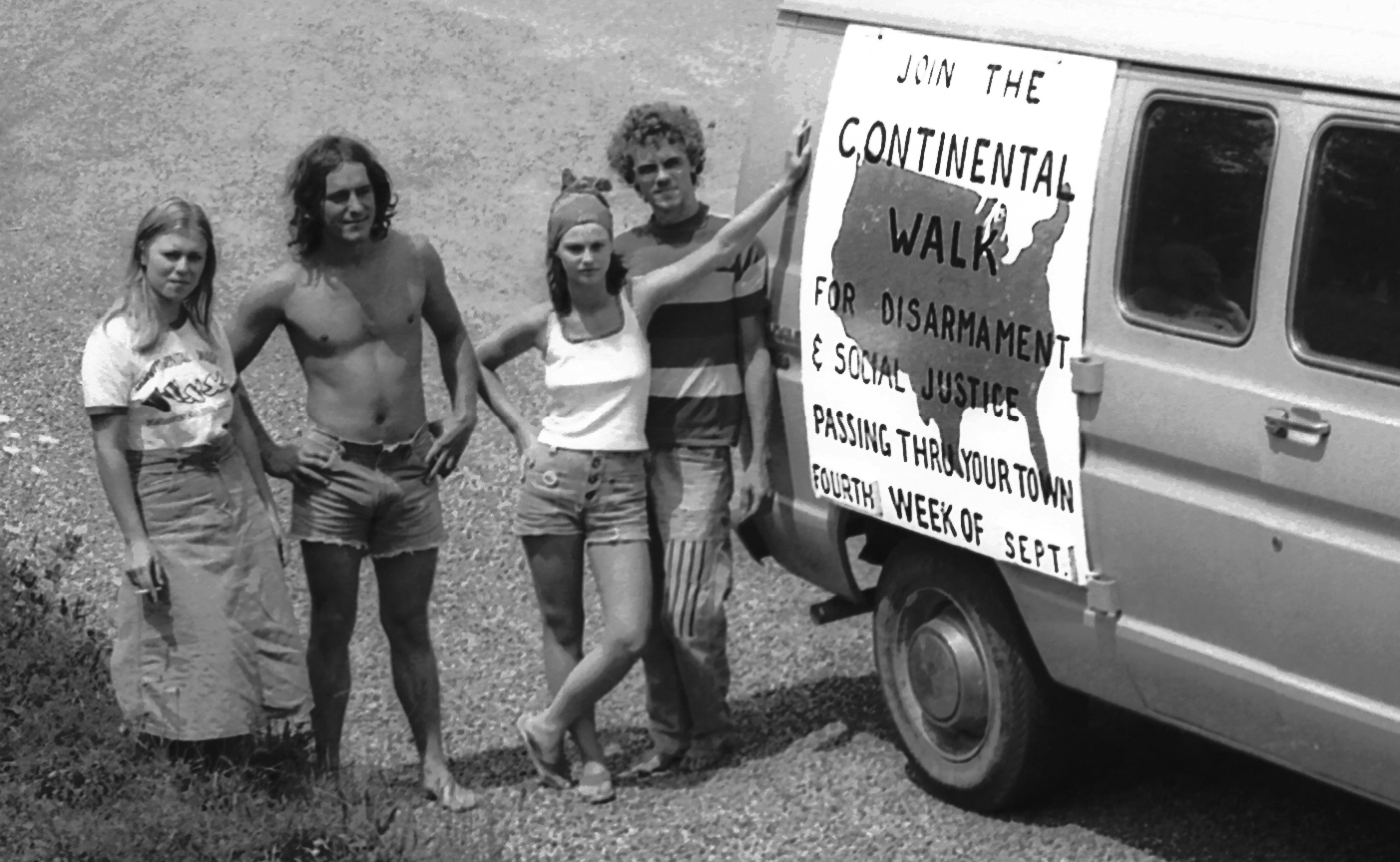
Finally, there’s only so much those of us in a national office can do. I can’t overstress the importance of generosity, energy, and creativity of local organizers; hosts who opened their homes to long distance walkers; and supporters such as Montana farmer Ermal Hansen donating 50 bushels of wheat before the walking even began; Santa Clara University students, in response to a leaflet titled “Take a Continental Marcher to Lunch,” using their guest passes to get walkers free lunches . . .
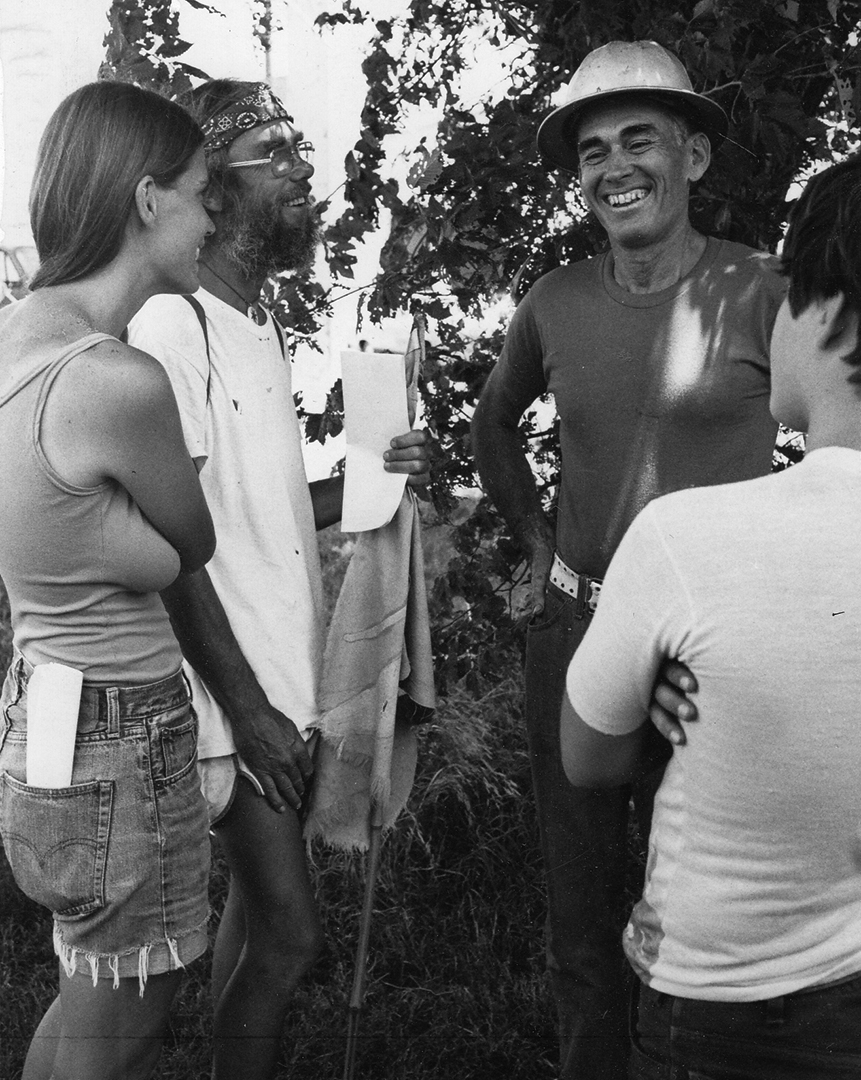
. . . supporters along the Colorado feeder route donating 20 loaves of bread, 40 pounds of bananas, 50 pounds of honey, and 300 dozen(!) eggs; a bluegrass band performing on a flatbed truck accompanying walkers into Oklahoma City; a truck bearing the sign “Welcome to Kansas, Continental Walkers!” driven by wheat farmer Delmar Martin surprising walkers at lunch time at the Kansas-Oklahoma border with five gallons of orange juice, three gallons ice cream, and cones. A rare and fantastic treat on a dry and dusty 85-degree day!
Sixth in a Series of 7 Blogs
Continental Walk Blog #1: Origins
Continental Walk Blog #2: Crisscrossing the Country
Continental Walk Blog #3: Convergence in Washington
Continental Walk Blog #4: The Organizing Begins
Continental Walk Blog #5: Walking, Walking, Walking
Ed Hedemann was the national coordinator for The Walk (1975-1976) and WRL national staff member (1973 to 1986)
Share