ORIGINS: Reminiscences of The Continental Walk 50 Years Later
Even before its first step, The Walk was attacked in the Congressional Record by a U.S. Congressman as well as dismissed by the head of one of our sponsoring organizations who privately commented, “It’ll never make it out of the Mohave desert.”
Despite doubters, neither snow nor rain nor heat nor gloom of night stayed these walkers from the completion of their march to Washington, DC, to paraphrase a famous quote. Nevertheless, there were many other challenges and harassment, including participants on the southern route getting arrested half a dozen times trying to walk through towns on their way to Washington, and an attempt to burn down the long distance walkers campsite in Oklahoma.
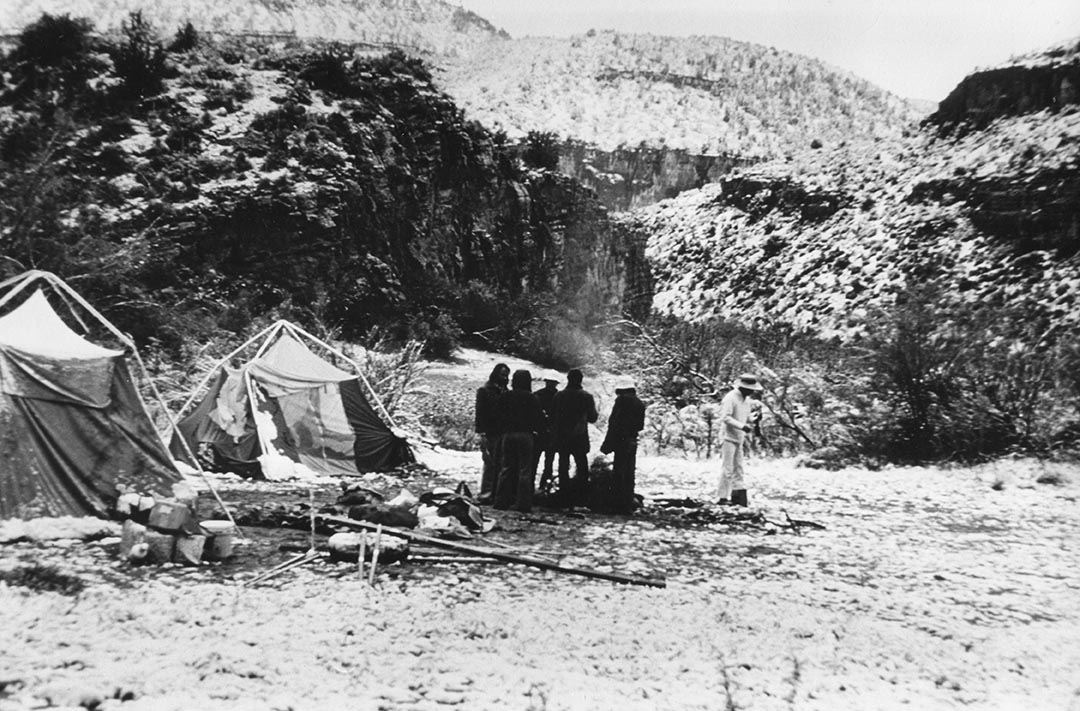
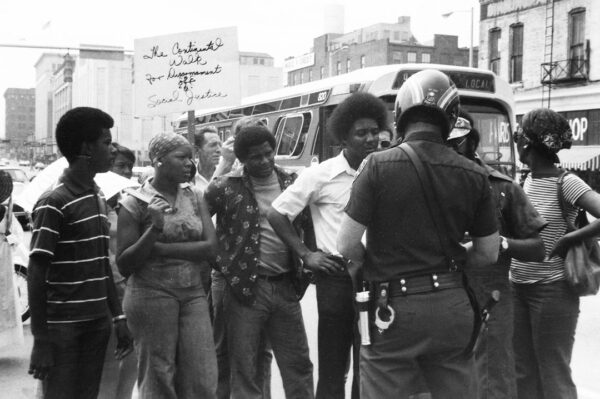
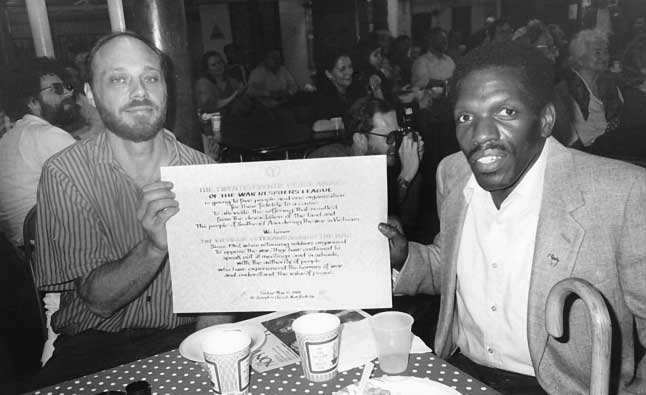
Jim Peck (WRL) holding sign in background
Photo: Judy Garrison
In the end, the Continental Walk for Disarmament and Social Justice was a complex and massive project and not only because of the estimated 20,000 people who participated, whether for a day or the entire nine months. In addition to a year of pre-walk organizing, the project involved 22 routes covering 34 states and 8,000 miles, and grew into a broad coalition of a couple dozen national organizations. It all happened thanks to efforts of many committed organizers, most of whom were experienced movement activists with key connections to crucial groups.
THE BEGINNINGS
In September 1974 the U.S. war in Vietnam was nearing an end after having dominated WRL’s program for more than a decade. A new focus was in order, so a task force was set up during that fall to explore several anti-militarism/disarmament project ideas.
The three front-runners were a) nationwide civil disobedience campaign focused on the Atomic Energy Commission and its facilities; b) a coordinated blockade of arms shipments around the country; and c) “stage a continental walk focusing on many issues surrounding militarism and disarmament.” This last one evolved from a Jack Travers (FOR) suggestion of simultaneous marches in every state to their respective capitals to which I proposed instead we organize consecutive marches from community to community across the United States in one long walk.
The January 6, 1975, meeting, the task force — including representatives from Fellowship of Reconciliation, Women Strike for Peace, Greenwich Village Peace Center, American Friends Service Committee, and Movement for a New Society — adopted the cross-country walk idea with the focus on disarmament and a redistribution of tax money to underfunded social programs.
The Walk was inspired by the 1961 San Francisco to Moscow Walk for Peace 15 years earlier, but with the crucial difference that this new project would be these coordinated relays between communities not just a single group of people crossing the entire country. Reps from this meeting agreed to return to their respective organizations to seek approval and get them to join this new coalition.
THE NAME
Though my suggestion of “The Continental Walk” for the project name was readily accepted in January 1975, the rest of the name wasn’t settled until eight months later (in September 1975) when “for Disarmament and Social Justice” was officially added, beating out “to End War,” “against War,” “for Peace and Disarmament,” “for Disarmament,” “for Disarmament and Justice,” “for No More Wars,” and so forth. One committee member expressed concern that some of these ideas were too negative, commenting “you attract more flies with honey than with vinegar.” Not that we were especially interested in attracting flies.
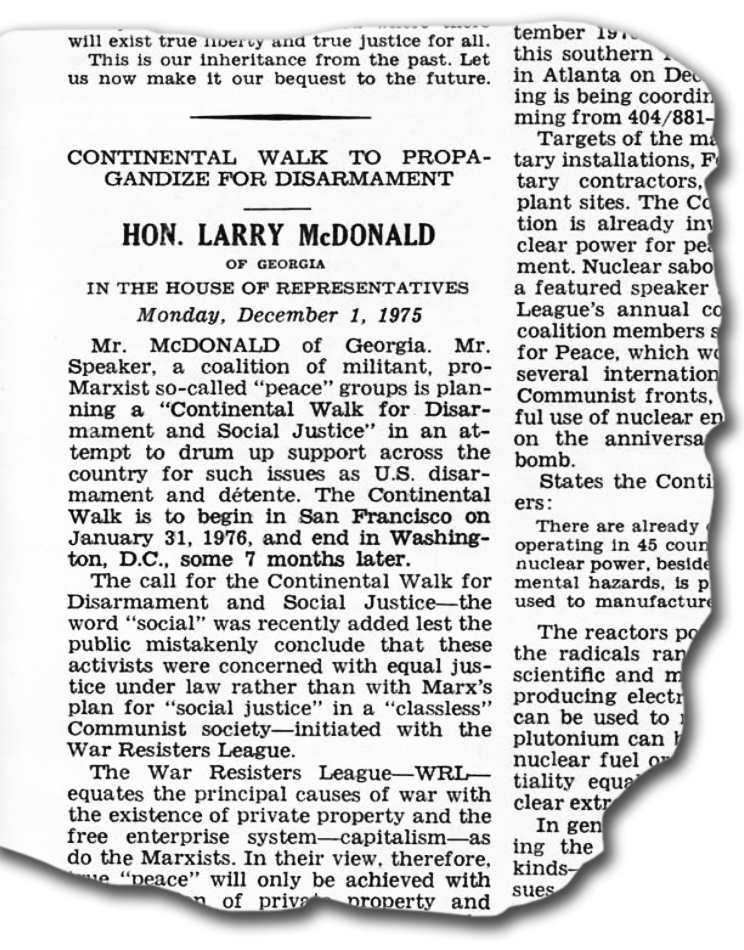
That December 1975 attack in the Congressional Record (p. 38047) was made by Rep. Larry McDonald (D-GA) who remarked, “The call for the Continental Walk for Disarmament and Social Justice — the word ‘social’ was recently added lest the public mistakenly conclude that these activists were concerned with equal justice under law rather than with Marx’s plan for ‘social justice’ in a ‘classless’ Communist society — initiated with the War Resisters League.”
On the other hand, a few months later Senator Mike Gravel (D-AK) entered the entire call for The Walk into the Congressional Record (go to p. 7134), stating “I am pleased to add my own name as a supporter of the Continental Walk.”
First in a Series of 7 blogs
Ed Hedemann was the national coordinator for The Walk (1975-1976) and WRL national staff member (1973 to 1986)
Share