THE ORGANIZING BEGINS: Reminiscences of The Continental Walk 50 Years Later
It’s one thing to decide to go ahead with an ambitious project like the Continental Walk for Disarmament and Social Justice and quite another to put it all together in a bit less than a year. Little did we imagine the crises that were lying in wait.
It was February 1975 when WRL — quickly followed by Catholic Peace Fellowship — became the first national organization to formally approve The Continental Walk. Our optimistic timeline envisioned six months walking from San Francisco on January 1 and ending in New York City July 4 in 1976.
The concept was for each link in the chain to be organized locally and coordinated regionally. These links would, if possible, initiate or conclude a long-term project against an appropriate “evildoer” (such as, military base, Pentagon contractor, or federal building) and incorporate a number of diverse issues.
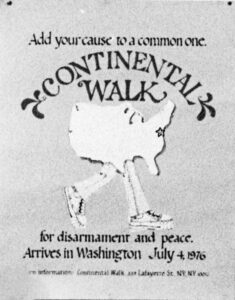
In addition to relocating the final destination to Washington DC, it soon became clear that six months was woefully insufficient to cross the country. During an early meeting one person noted that “according to the stars” September 15 would be a “terrific day” to end the Walk. Needing more time, we ignored the stars and chose October 16, 1976, instead.
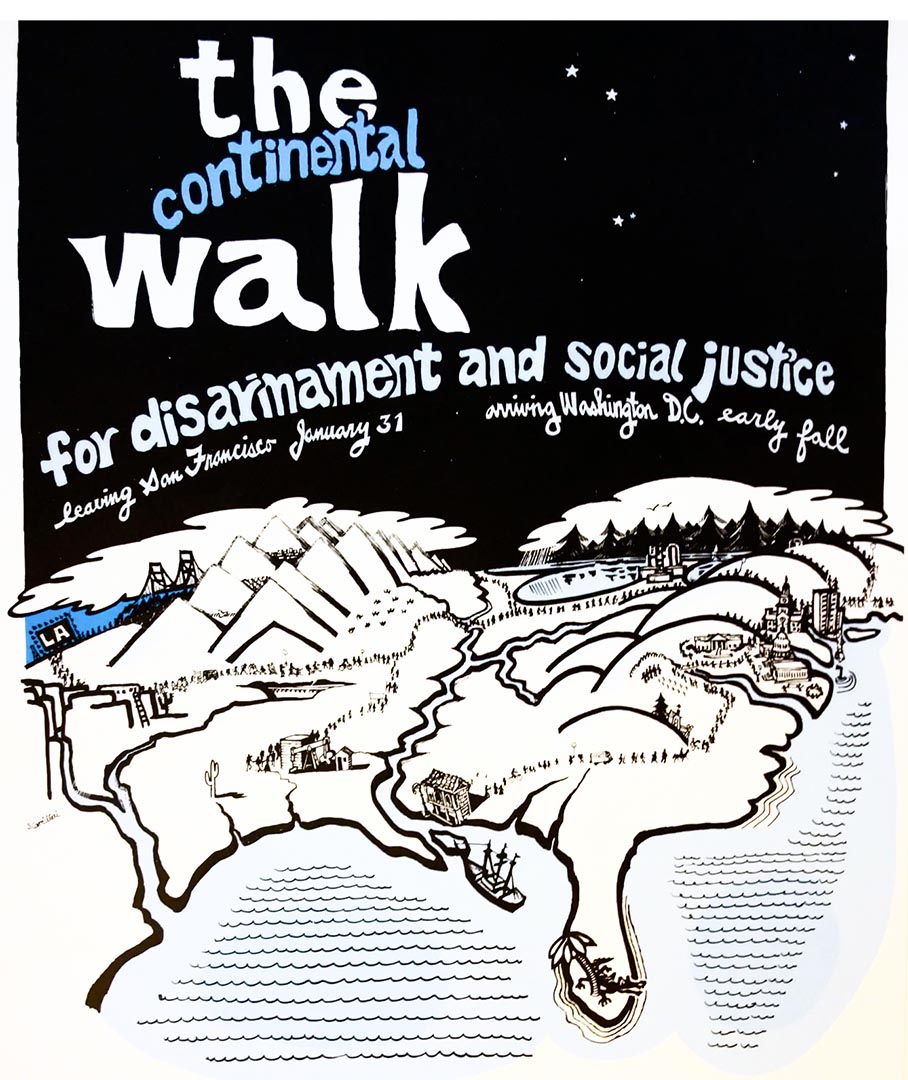
THE COMMITTEE
The Coordinating Committee, created in February 1975, was initially composed of three members of the WRL Executive Committee, a Texas organizer, a long-time California activist, and reps from WRL/West and WRL local groups across the country with me acting as convenor.
Our first tasks were to develop a detailed proposal and draft a Call to explain our politics, attract well-known people as signers,* add sponsoring organizations, and fundraise. The Call, initially drafted by David McReynolds, was officially issued on Hiroshima Day, August 6, 1975.
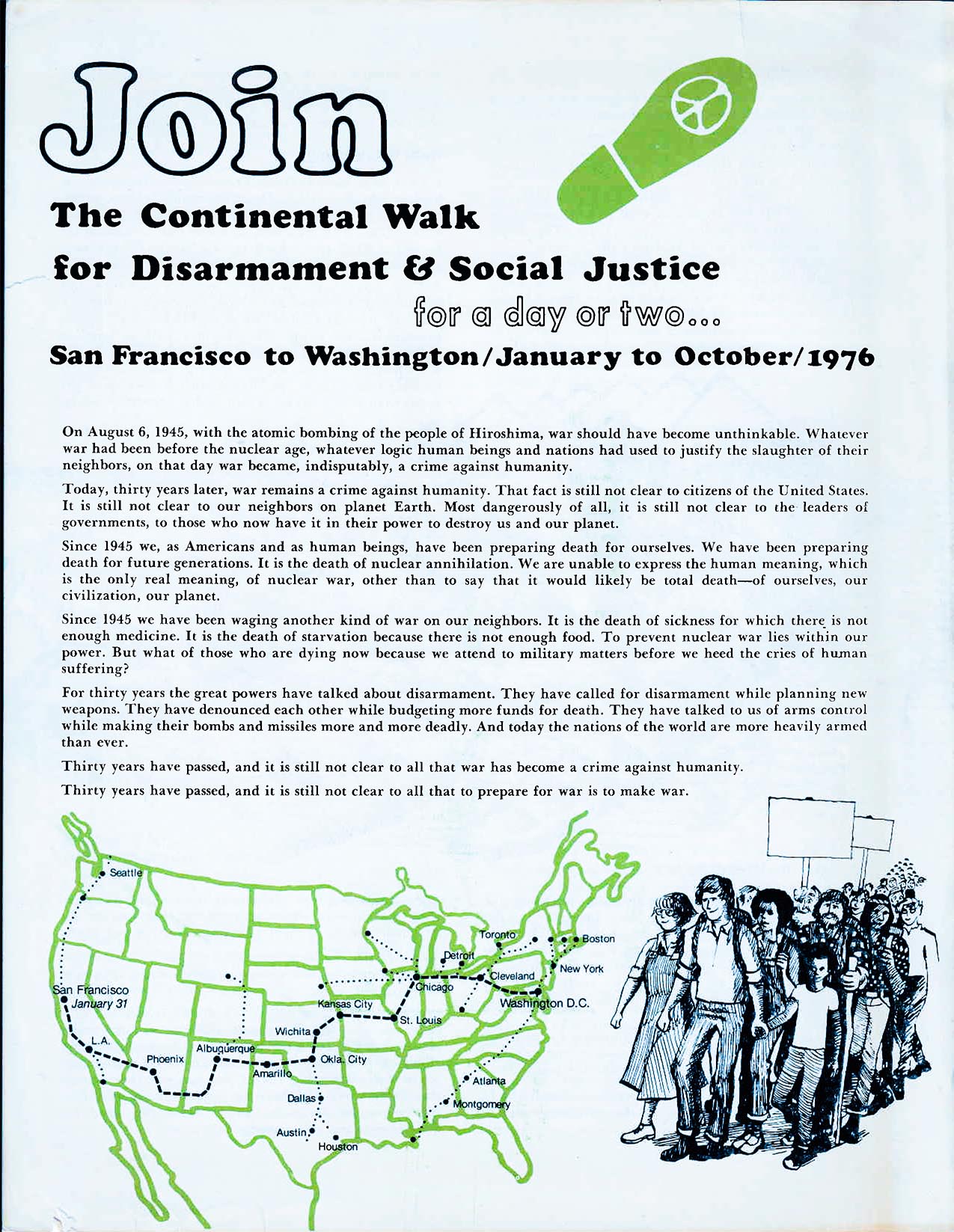
In addition to WRL and CPF, the list of sponsoring groups continued to grow until we eventually reached 22 national and 5 international organizations, not to mention the dozens of local and regional groups scattered throughout the country.
LONG DISTANCE WALKERS
At first, we envisioned no long distance walkers but very quickly realized that extended stretches through deserts and unpopulated areas required a core of walkers who not only would fill in the gaps but also have available basic signs, banners, literature, provide political continuity, and be the adhesive that held the Walk together.
The first person to express interest in walking the entire main route contacted us in May 1975, almost nine months before any walking began. By early September there were about a dozen — an optimal size we thought — who expressed interest. However, that number continued to grow, such that even before walking had begun, it had swollen to an unmanageable 100. Furthermore, in December, Japan Buddha Sanga offered to send monks to each of the three main routes.
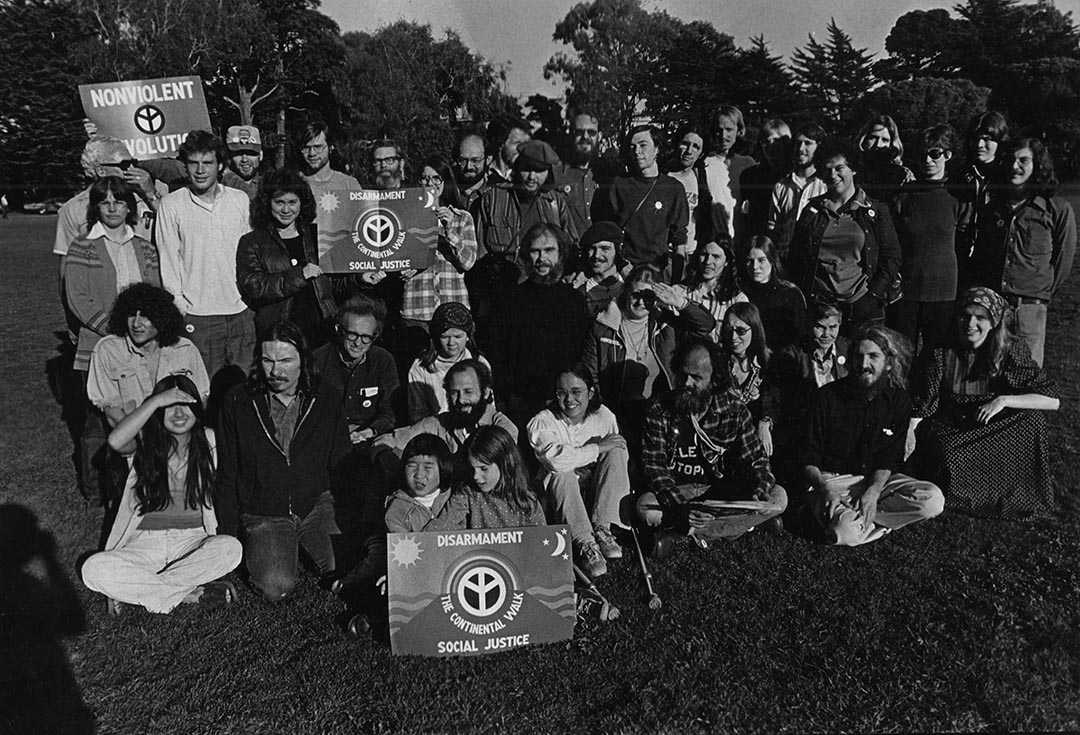
Nevertheless, the Walk set off from San Francisco on January 31 as planned. But this unwieldly size plus growing conflicts among long distance walkers in the early days necessitated pausing the Walk in southern California to sort things out.
Many walkers were young and inexperienced, some had little knowledge of or commitment to the politics of the project. A few even wanted to take the Walk along a totally different route and on another timetable, essentially hijacking the whole thing.
So, a little more than a month out of San Francisco, Joanne Sheehan and Mandy Carter (initially with David McReynolds) made an emergency trip to help resolve the internal disputes and provide structure. In a 2013 interview, Joanne and Mandy recounted some of that history.
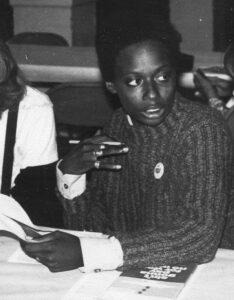
Mandy Carter, Claremont, CA, May 11, 1976. Photo courtesy of WRL 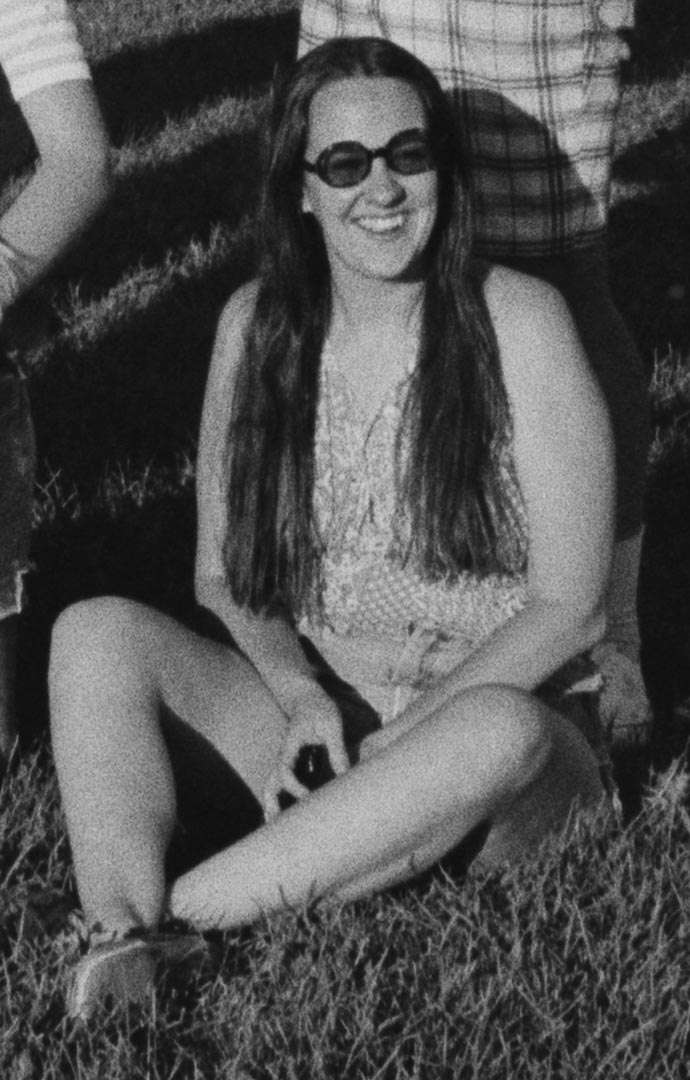
Joanne Sheehan during the August 1976 retreat for national organizers, Cream Ridge, NJ. Photo: Grace Hedemann
With the major crisis resolved, leaving it a smaller more cohesive core of long distance walkers, the Walk resumed its eastward trek for the remaining seven-plus months. This slide show, assembled by three walker-photographers, provides glimpses of life on the San Francisco to Washington route.
Next up were many other urgent tasks, such as, finding local communities to set up events and host the walkers, advertising and promotion, literature production and distribution, planning for Washington DC events, and, of course, ceaseless fundraising.
*In addition to well-known movement people (such as Jim Peck and David McReynolds) who were heavily involved with the project, among the notable signers of the Call were Ralph Abernathy, Bella Abzug, Joan Baez, Harry Belafonte, Dan Berrigan, Phil Berrigan, Robert Bly, Julian Bond, Kay Boyle, Anne Braden, Joe Chaikin, Cesar Chavez, Noam Chomsky, William Sloan Coffin, Dorothy Day, Karen DeCrow, Dave Dellinger, Ron Dellums, Daniel Ellsberg, Barbara Ehrenreich, Sissy Farenthold, Mimi Farina, Jules Feiffer, Lawrence Ferlinghetti, Sen. Mike Gravel, Dick Gregory, Allen Ginsberg, Tom Hayden, Nat Hentoff, Dwight Macdonald, Seymour Melman, Eve Merriam, Holly Near, Grace Paley, Rosa Parks, Charles Rangel, Muriel Rukeyser, Martin Sostre, Benjamin Spock, Gloria Steinem, I.F. Stone, Studs Terkel, Pete Seeger, George Wald, Art Waskow, Peter Yarrow
Fourth in a Series of 7 blogs
Continental Walk Blog #1: Origins
Continental Walk Blog #2: Crisscrossing the Country
Continental Walk Blog #3: Convergence in Washington
Ed Hedemann was the national coordinator for The Walk (1975-1976) and WRL national staff member (1973 to 1986)
Share