The Middle Years: The Emerging Role of Women in WRL
In accord with Jessie Wallace Hughan’s belief that WRL would likely be more effective if led by men, the role of women, and certainly their authority, decreased substantially post WW II.
Indeed, for the next several decades WRL women primarily served as adjuncts to men: doing office work so men could organize demonstrations or resist the Vietnam-era draft, and providing insights at organizational meetings which, in public settings, the men adopted as their own. Even worse, a poster circulated in the late 60s showed Joan Baez and her two sisters with the slogan: “GIRLS SAY YES to boys who say NO.” To be sure, WRL’s home-grown sexism was no different from that of society in general at the time, but it contrasts poorly with its impressive activism to resist society’s racism.
Coincident with second-wave feminist in the late 1960s, WRL hired me as its first female staff member equal with the male staff in several decades. Eventually, the spot for a sole woman expanded until finally there was almost gender parity. Similarly, women were added to the executive committee at an increasing rate.
After years of male-centric demonstrations protesting the draft and supporting resisters, women in the peace movement began organizing their own demonstrations focused on other key issues and WRL assigned staff women to their organizing bodies. For example, I was the liaison to Ring Around the Congress. Held on June 22, 1972, and led by Coretta Scott King and Joan Baez, the action brought 2,000 nonviolent demonstrators to the Capitol to demand that funding be cut off for the Vietnam War.
Nearly a decade later, staff member Susan Pines became WRL’s liaison to the Women’s Pentagon Action. On November 17, 1980, 2,000 women circled the Pentagon, including 140 who committed civil disobedience and were arrested, demanding policies and programs to support “life on earth.”
Perhaps the most significant indication of WRL’s growing appreciation of women’s contributions was the executive committee’s election of three women chairs in succession.
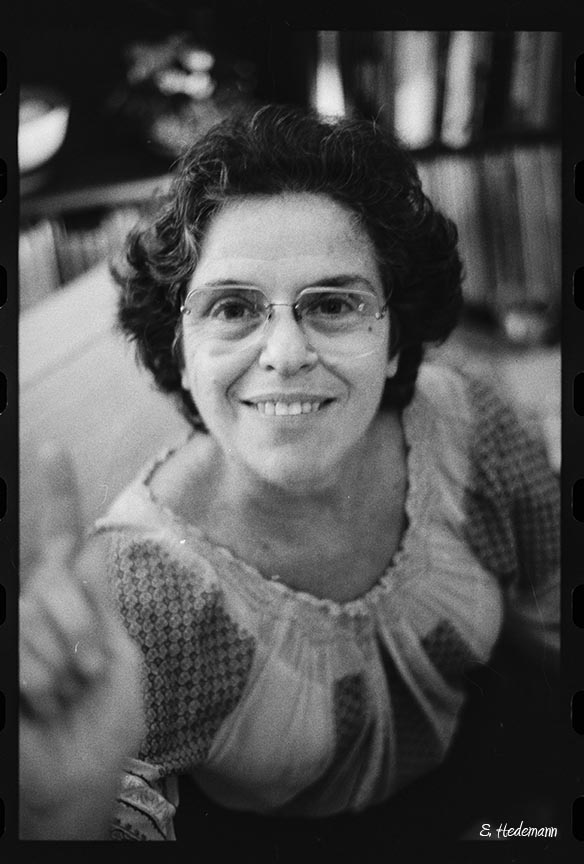
Irma Zigas (1930-13) served as chair from 1973-76. She was also a leader of Women Strike for Peace, an activist organization rooted in traditional female culture with a wide-ranging anti-war and anti-nuclear platform. Irma was succeeded by Norma Becker (1930-2006) who served from 1977-82. Norma had been a teacher in the southern summer Freedom Schools; was an activist member of the United Federation of Teachers advocating for anti-racist policies and practices in the union and at schools; and was a founding member of two key anti-war coalitions, the Fifth Avenue Peace Parade Committee and the Mobilization for Survival.
Linnea Capps (1950-2021), the last female, and the penultimate, chair of WRL, served from 1983-85. A medical doctor and proponent of liberation medicine, she spent long periods attending to the medical needs of the people of El Salvador, Chiapas, and Uganda, while also maintaining an internal medicine position at New York hospitals. Especially notable, Linnea ran an AIDS clinic in the 80s when many doctors refused to treat people with the disease.
Though these three pacifist women are gone now, each left a distinctive legacy of service to WRL— a renewal of the power of women leadership that Jessie Wallace Hughan had first demonstrated so many decades ago.
– Blog post by Wendy Schwartz
Sources: Scott Bennet, (2003). Radical Pacifism: The War Resisters League and Gandhian Nonviolence in America, 1915-1963, Syracuse University Press; The New York Times, June 23, 1972, “2,000 Protest War By Forming a Ring Around the Capitol”; Ginger Hanks Harwood, Peace Activist Women in the US in the 1980’s: Values, Vision and the Transformative Potential of Public Dialog, LaSierra University.
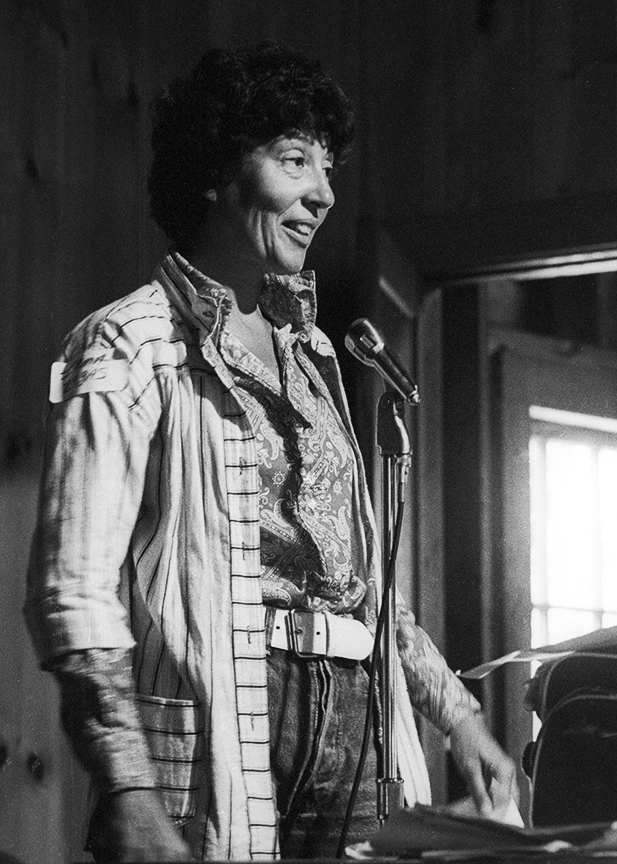
Irma Zigas at 1974 Conference (Photo by Grace Hedemann)
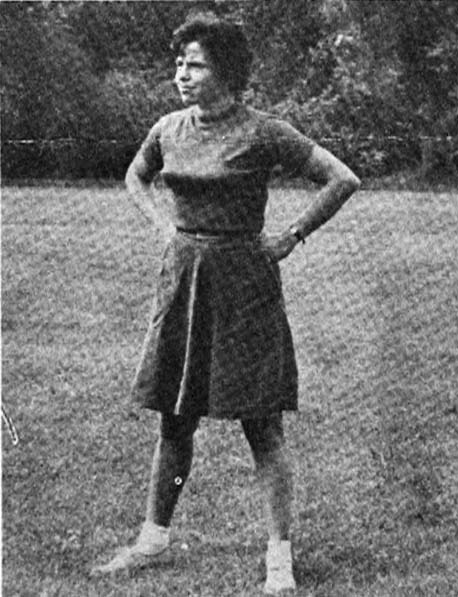
Norma Becker – (left) from the cover of a 1977 WRL News when Norma became chair (Photo by Bradford Lyttle); (right) September, 1983 (Photo by Ed Hedemann)

Linnea Capps in Durham, NC. October 1982 (Photo by Ed Hedemann)
Share