Judith Mahoney Pasternak (1939-2026)
We are again heartbroken to share the news of the passing of another long term WRLer Judith Pasternak. Judith, our editor and comrade, worked closely with John M. Miller, whom she asked to write her obituary. Here is what John wrote before he passed 5 months earlier.
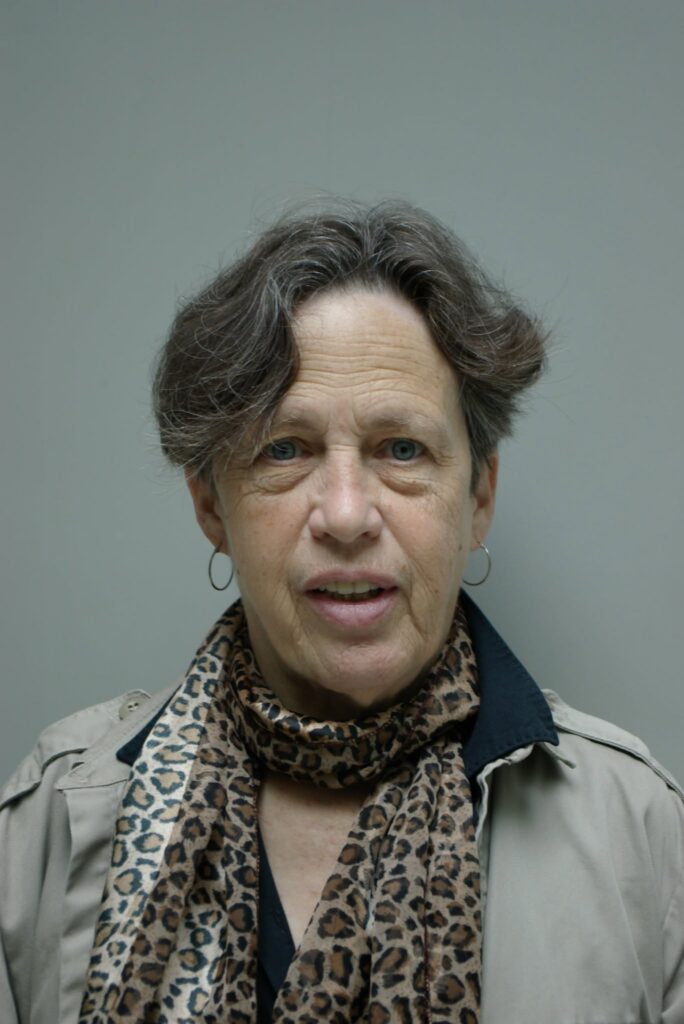
PASTERNAK—Judith Mahoney. U.S.-born left-wing print and radio writer, journalist, editor and activist for peace and radical democracy and against white supremacy and male domination, died last week. Judith had lived for many years in Paris and died in a care home near family members in Poole, UK. She was 86.
Pasternak was the author of seven books including Timeless Places: Paris, (Metro Books, 2003), innumerable articles, reviews, and analyses, e.g., the anti-Zionist credo “Nine Stops on a Long Road: One Jew’s Journey” (Tikkun, 2018, published in French in ContreTemps No. 44, 2020). She wrote two not yet published novels. She also published poems and short stories, the latter including “The Family Nude” (The Baffler, Jan. 2021, and translated into French in ContreTemps No. 56, 2023), her mini-epic of life on the U.S. left across six decades. It was a terrain she knew well, as what is now called a “red-diaper baby” who followed her family’s long tradition of active nonviolent resistance. On August 28, 1963, her writing career barely started, she was one of the half-million people gathered at the Lincoln Memorial to hear Dr. King describe his dream; for decades she joined the annual commemorative events around the atomic bombing of Hiroshima and Nagasaki; and she protested the war in Vietnam throughout its long duration.
She was of half Russian-Jewish and half Irish ancestry and identified with both strands, if perhaps more strongly as a Jew. When the women’s liberation movement’s Second Wave rose up in the early 1970s, she identified with it almost immediately. Its axiom, “The personal is political,” came to perfuse most of what she wrote on any subject, subjects that ranged from movies and pop culture to war and peace, the structure called patriarchy, U.S. labor history, white supremacy, and Palestine. From 1973 to 1984, she broadcast feminist and lesbian programming over New York’s listener-sponsored radio station WBAI, co-founded a department of women’s programming there, and in 1980 directed Oakdale, Indiana, a ground-breaking all-woman comedy version of 1950s soap operas. From 1982 to 1992 she wrote reviews and commentary for the independent left weekly The Guardian and served as its Managing Editor during its last year. The War Resisters League became her political home in 1995, when it hired her to edit its magazine The Nonviolent Activist. She held the job for ten years, followed by another ten on the League’s executive body. During some of the many intervals when writing and editing for progressive media failed to provide rent money, at one or another time she wrote advertising copy, drove a New York City taxi and a florist’s delivery truck, took on paid child-care work and market research phone calling jobs, and for one night only waited tables in a Greenwich Village café.
She was married twice, to the late Jack Lass from 1958 to 1960, and from 1972 to 1982 to Donald Pasternak, now of Naples, Florida. Her older son, Adam Thomas Lass, and two brothers, Don Mahoney and David Kelvin, pre-deceased her, but she is survived by two children and a son-in-law, Brian R. Pasternak in New York City and Miriam Pasternak Tremelling and Gregory Tremelling, in Folsom, California; her widowed daughter-in-law, Jessie Gilbard, in Tigard, Oregon; her sisters, Joan Mahoney, in Bournemouth, England, and Martha R. Mahoney, in Miami, and a brother and sister-in-law, Peter and Joanne Kelvin, in New York City; three grandchildren, more than a dozen nieces and nephews, and their offspring; her longtime companion in Paris; scores of grieving friends and colleagues; and her words.
Judith’s family is planning an online memorial and we will post when we know the details.
Share