Music Fuels Movements for Social Change
When Pete Seeger said, “The right song at the right moment can change history” he spoke a truth that resonates with peace and justice activists across time and space. No matter our age, where we live, or which action we take for peace and social justice, songs bring us together and give us strength, courage, and hope to take action. Three of the War Resisters League’s annual Peace Calendars feature music that has fueled movements in the past 100 years.
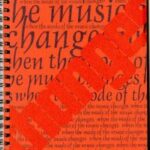
Cover of 1971 WRL Peace Calendar: A Rock Anthology: When the Mode of the Music Changes, Cover Design by Burton LeVitsky 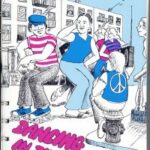
Cover of 1982 WRL Peace Calendar: Dancing in the Streets: A Collection of Popular Music Lyrics, Cover Art by Josh Brown 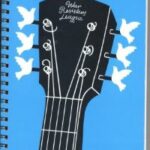
Cover of the 2006 WRL Peace Calendar: Peace-Loving Nations: Music of Peace and Resistance, Cover Art by Luba Lukova
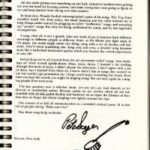
The 1971 WRL Peace Calendar: A Rock Anthology: When the Mode of the Music Changes is an anthology of rock ‘n’ roll lyrics selected by Mayer Vishner with a Foreward by Pete Seeger. The cover design is by Burton LeVitsky. It includes Pete Seeger’s song “Where Have All the Flowers Gone,” Phil Ochs’ song “The War is Over,” “The Great Mandala” by Peter, Paul & Mary, “Yellow Submarine” by The Beatles, songs by The Rolling Stones, and many more.
Writing in his Foreward to the 1971 Peace Calendar, Pete Seeger spoke as if he were speaking today in 2025. He said, “The key question is whether music (or any art) can lead directly or indirectly to worthwhile action… Our nation is as full of communication as a crowded cocktail party. It is also full of people asking ‘what can I do?’ May these songs help us decide.”
The 1982 WRL Peace Calendar: Dancing in the Streets: A Collection of Popular Music Lyrics edited by Diane Becker and Dorie Wilsnack with cover art by Josh Brown “…was conceived as a collection of song favorites reflecting that part of each of us which has been 17-years old for the past 25 years — with an ear to the radio the whole time. … What is outstanding about popular music as a medium is that its universal language is so accessible. The moments it captures for us become expressions of shared sensibilities and hope that there really is more to life.”
Ellen Davidson and Gene Glickman edited the 2006 WRL Peace Calendar: Peace-Loving Nations: Music of Peace and Resistance Luba Lukova provided the cover graphic and design. In their introduction, Glickman and Davidson said “Music has been an integral part of the struggles for peace and justice, from the first traveling minstrels who poked fun at the tyrannical aristocracy of their times to the Industrial Workers of the World — perhaps the singing-est union movement of all time — to the pop and nueva canción musicians of the ’60s and ‘70s to the improvising choruses of the anti- apartheid movement to today’s hip-hop and world beat artists. The combination of sensual, intellectual, emotional and physical energies that go into singing, in particular, has the capacity to move people in surprising ways and to surprising degrees.”
What music fuels your activism?
WRL 100th Anniversary Project Coordinator Mary McClintock is one of the founders of the Greenfield, MA Weekly Peace Vigil standing for peace since 2002. Mary is someone who draws on the power of singing in all of her activism.
Share