THE PENTAGON: Reminiscences of The Continental Walk 50 Years Later
March to the Pentagon
The final day of walking — Monday October 18 — threatened to be cold and rainy. It was cold and sunny. The Park Police were unyielding in their insistence we walk on the sidewalk across the Memorial Bridge to Virginia. We were ready to walk in the streets up to the point of arrest while negotiating furiously.
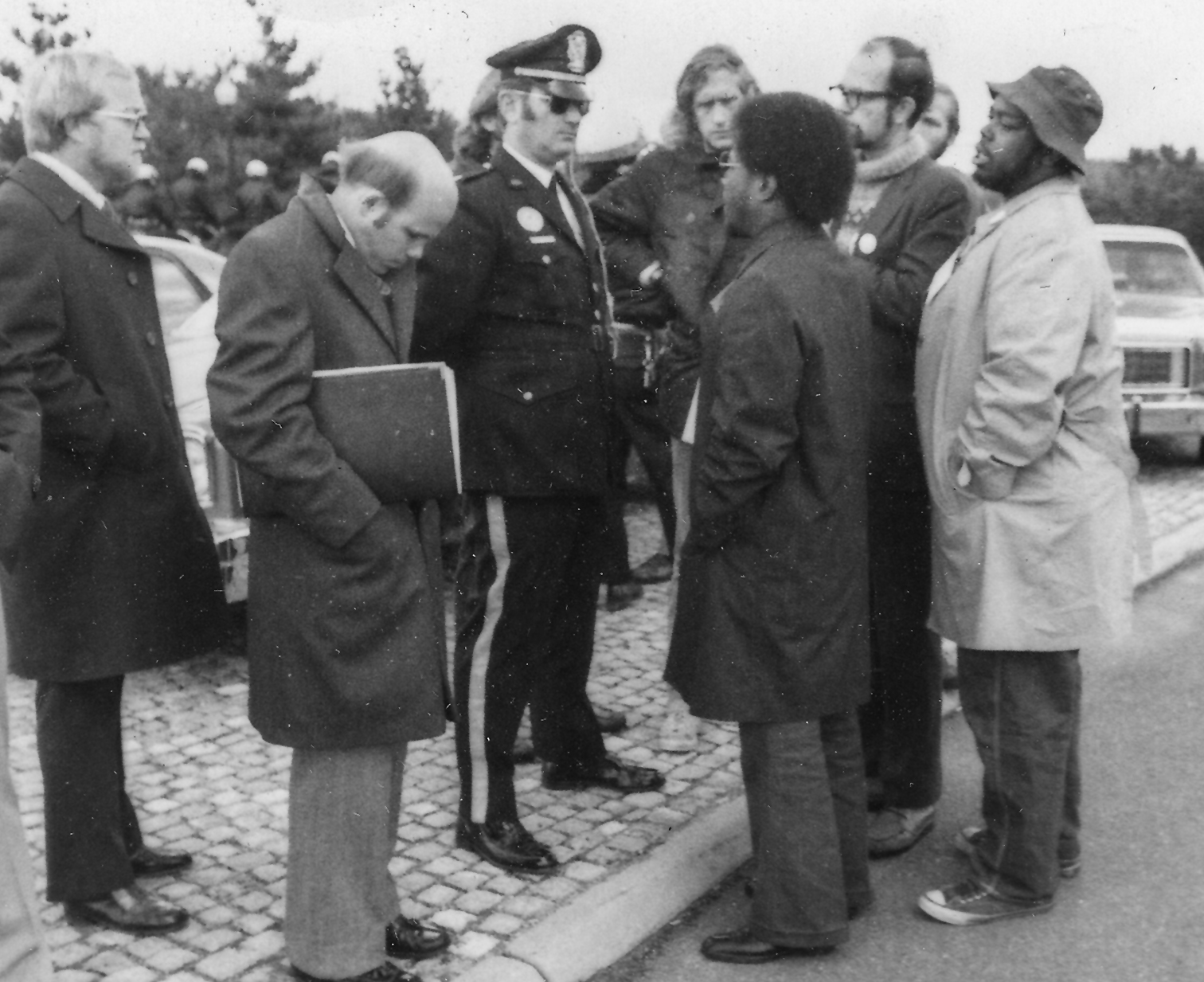
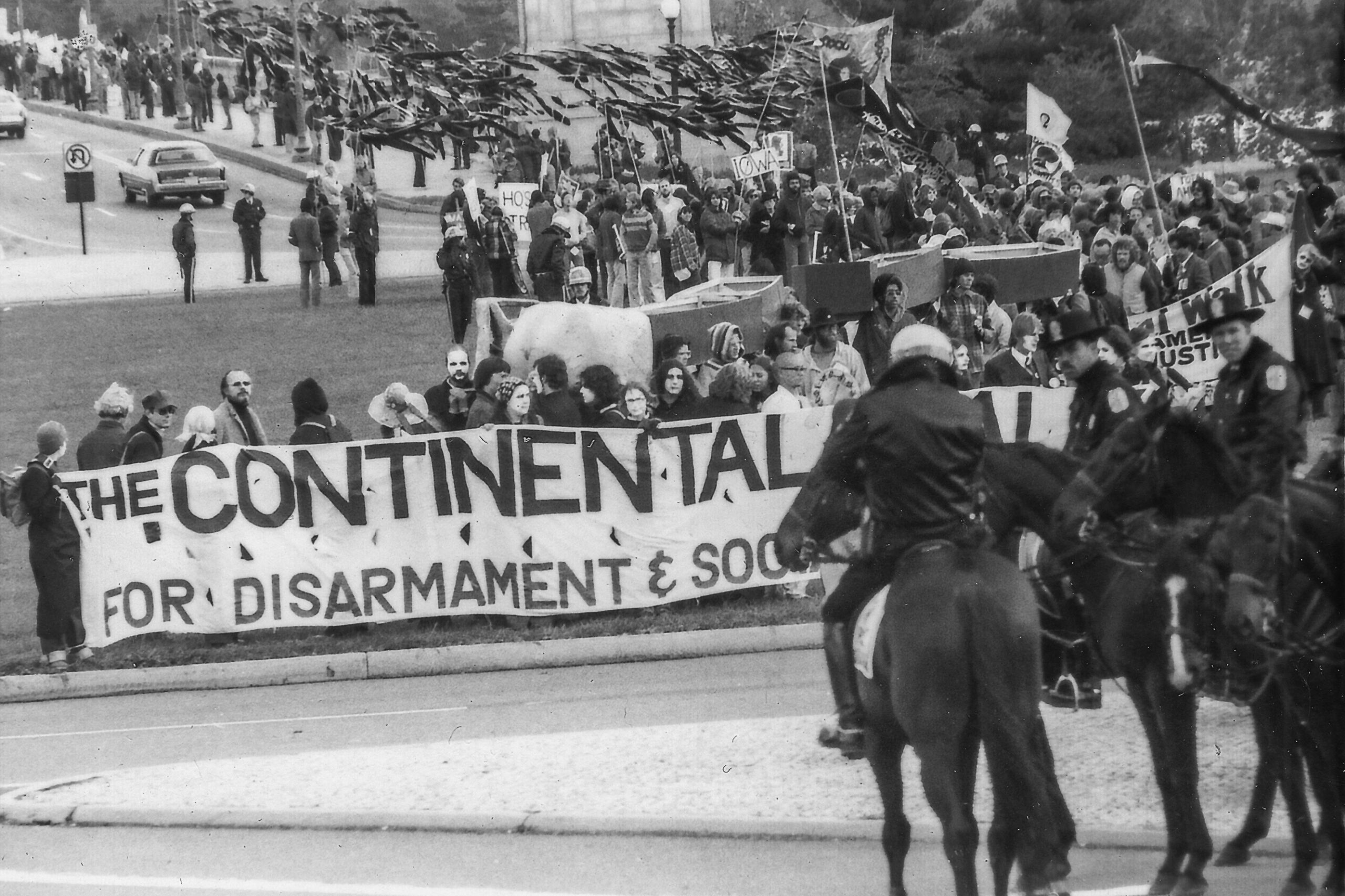
The authorities were prepared, including about a dozen mounted police with a station wagon containing two snarling, furiously barking, vicious-looking police dogs — the ‘‘Old South’’ deployed at the Pentagon. We took the sidewalk across the bridge rather than jeopardize the permits we had for the day. Once across, we passed Arlington Cemetery and walked in the road the rest of the way to the Pentagon.
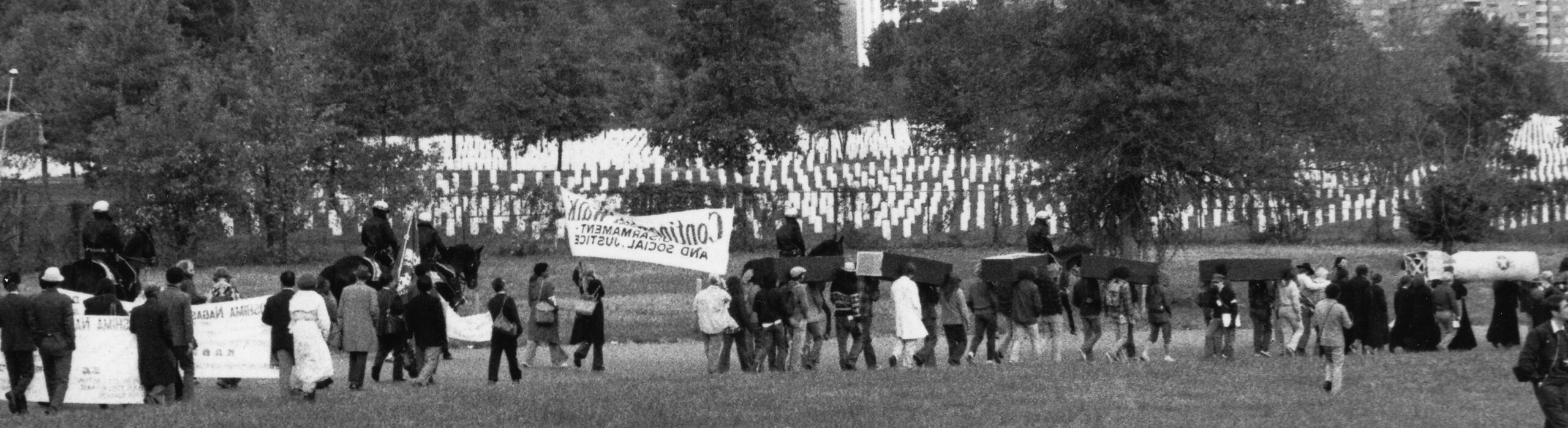
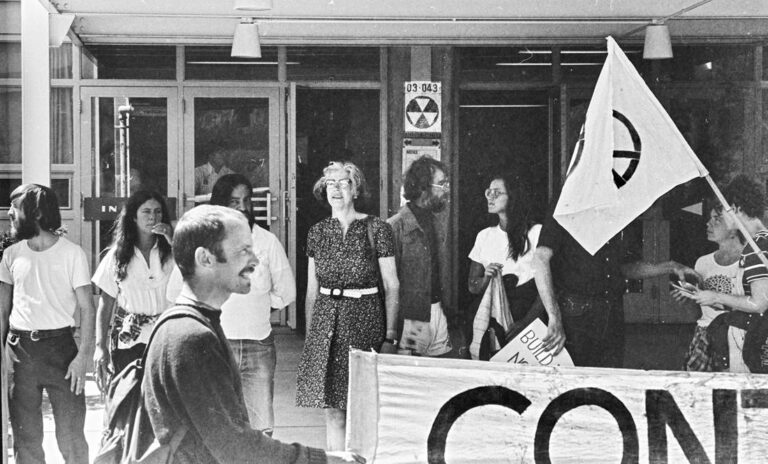
Approaching the Pentagon, the procession was magnificent. We paraded onto the grassy ceremonial area in front of the Pentagon’s River entrance. As Daniel Ellsberg spoke and pointed accusingly at his old office building, a smaller group of people were making plans to take the coffins, Hiroshima bomb facsimile, and Declaration of Nonviolence to the steps of the Pentagon.
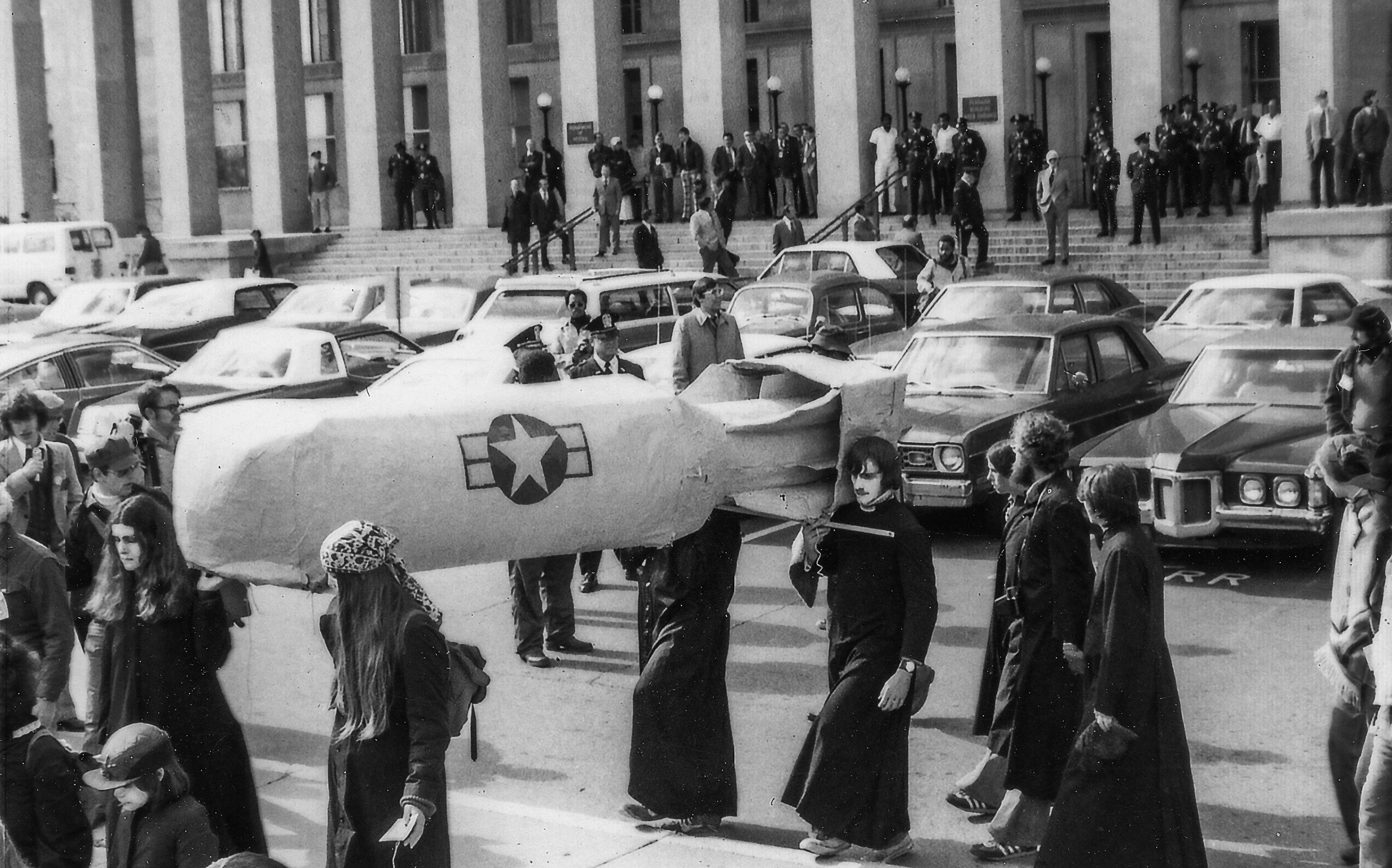
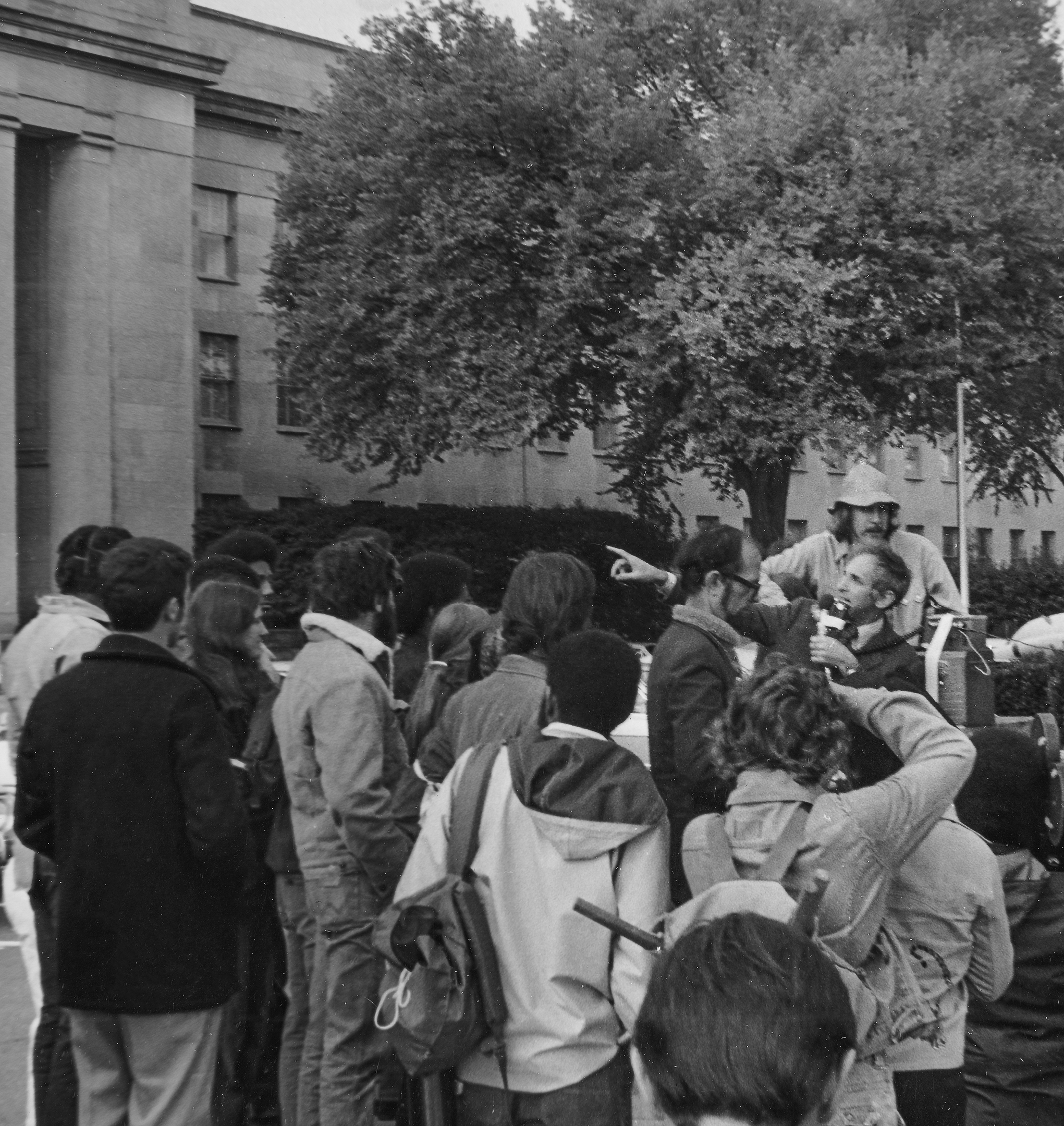
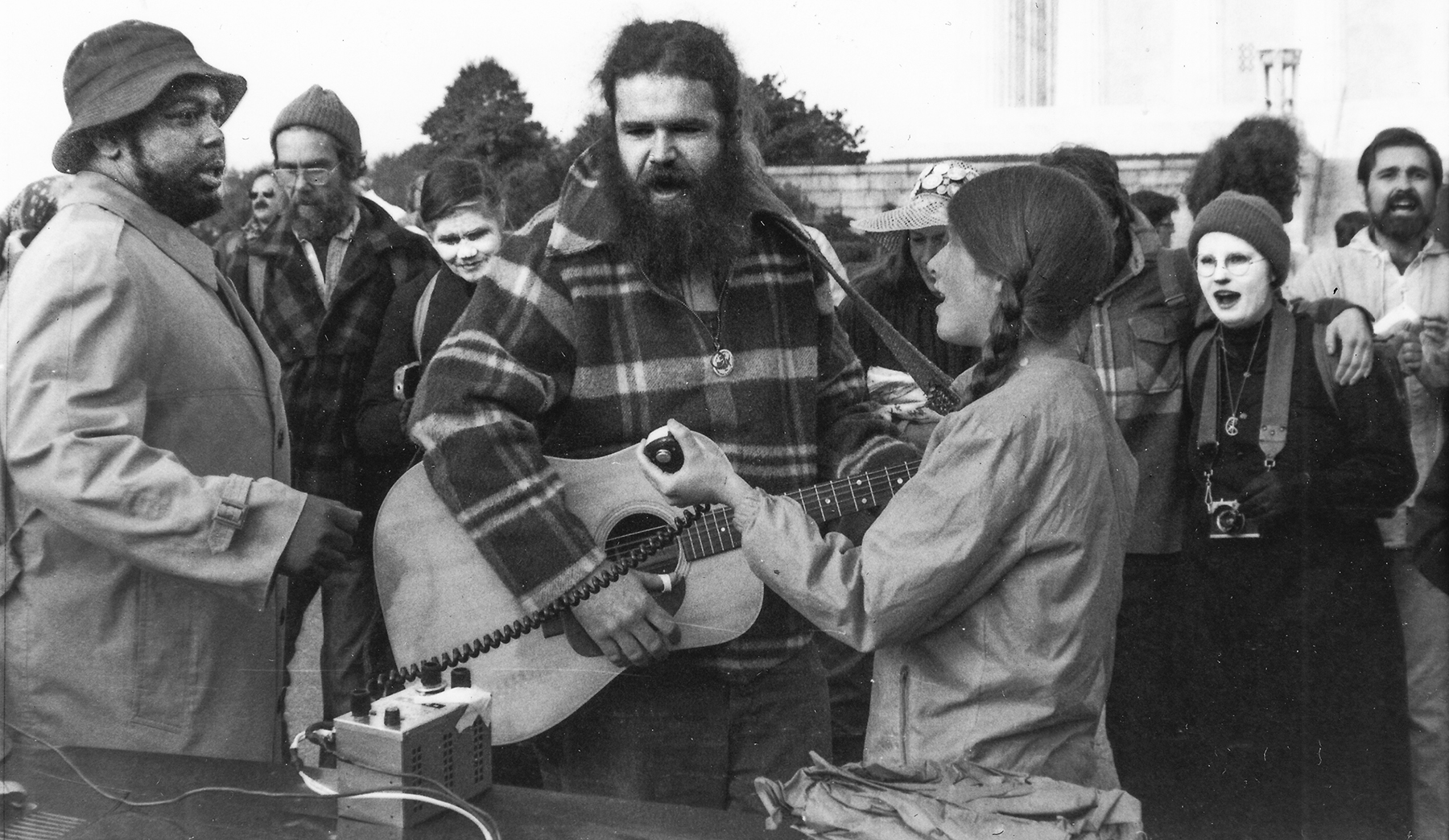
When the speeches ended about 100 of the 700 demonstrators carried the coffins across the small executive parking lot as Charlie King began singing ‘‘Gonna Lay Down My Coffins and Bombs, Down by the Pentagon.”
Suddenly about 30 police in riot gear with yard-long night sticks ran from two buses parked nearby to block the River entrance. At that point the demonstrators stopped and laid down the coffins and “bomb.”
After a few minutes of discussion and negotiating, the demonstrators began to read the Declaration of Nonviolence and the police responded by making arrests. They were conspicuously avoiding arresting Ellsberg as he asked them ‘’Why are you arresting these Americans?’’ Finally, they walked him off along with 53 others.
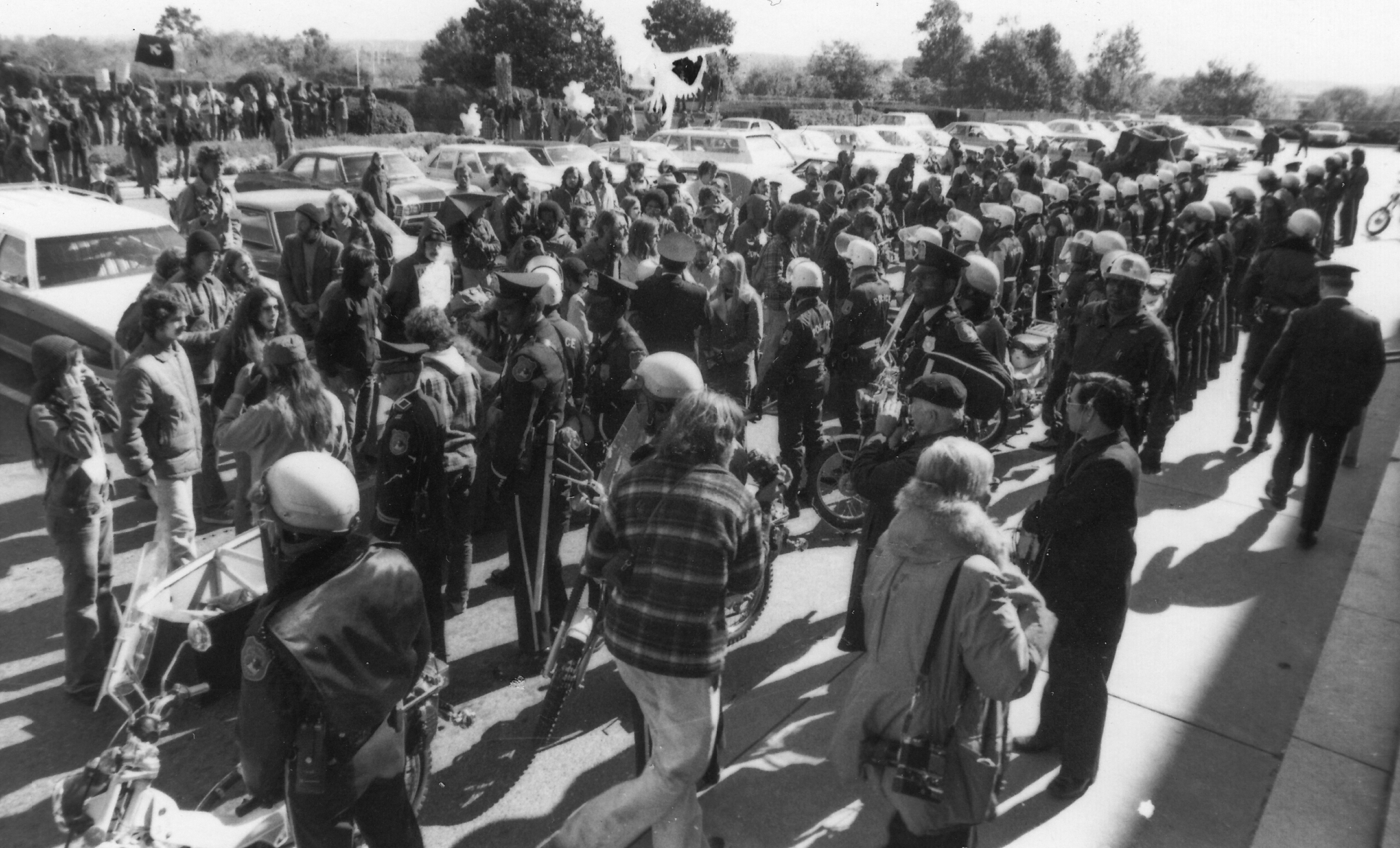
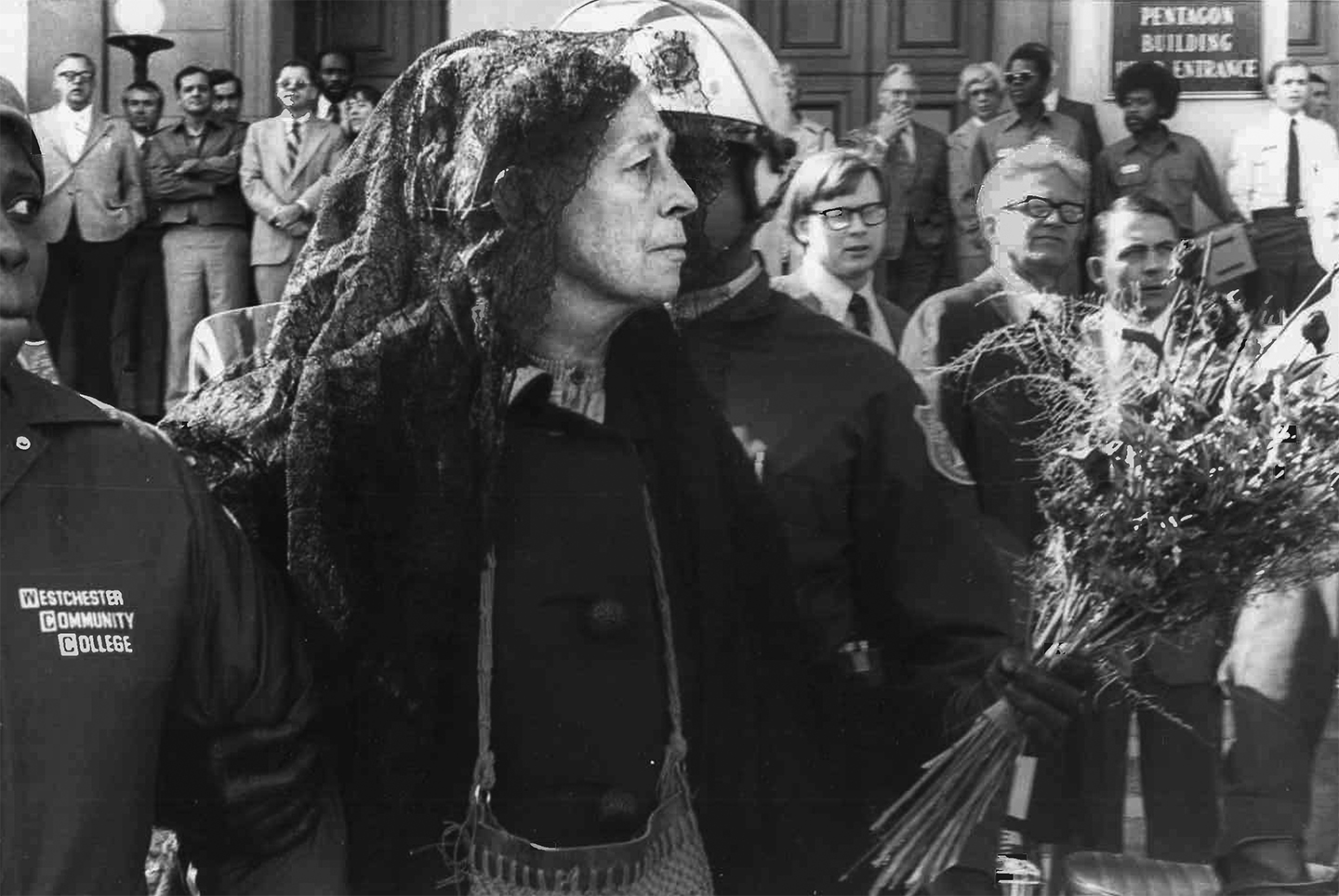
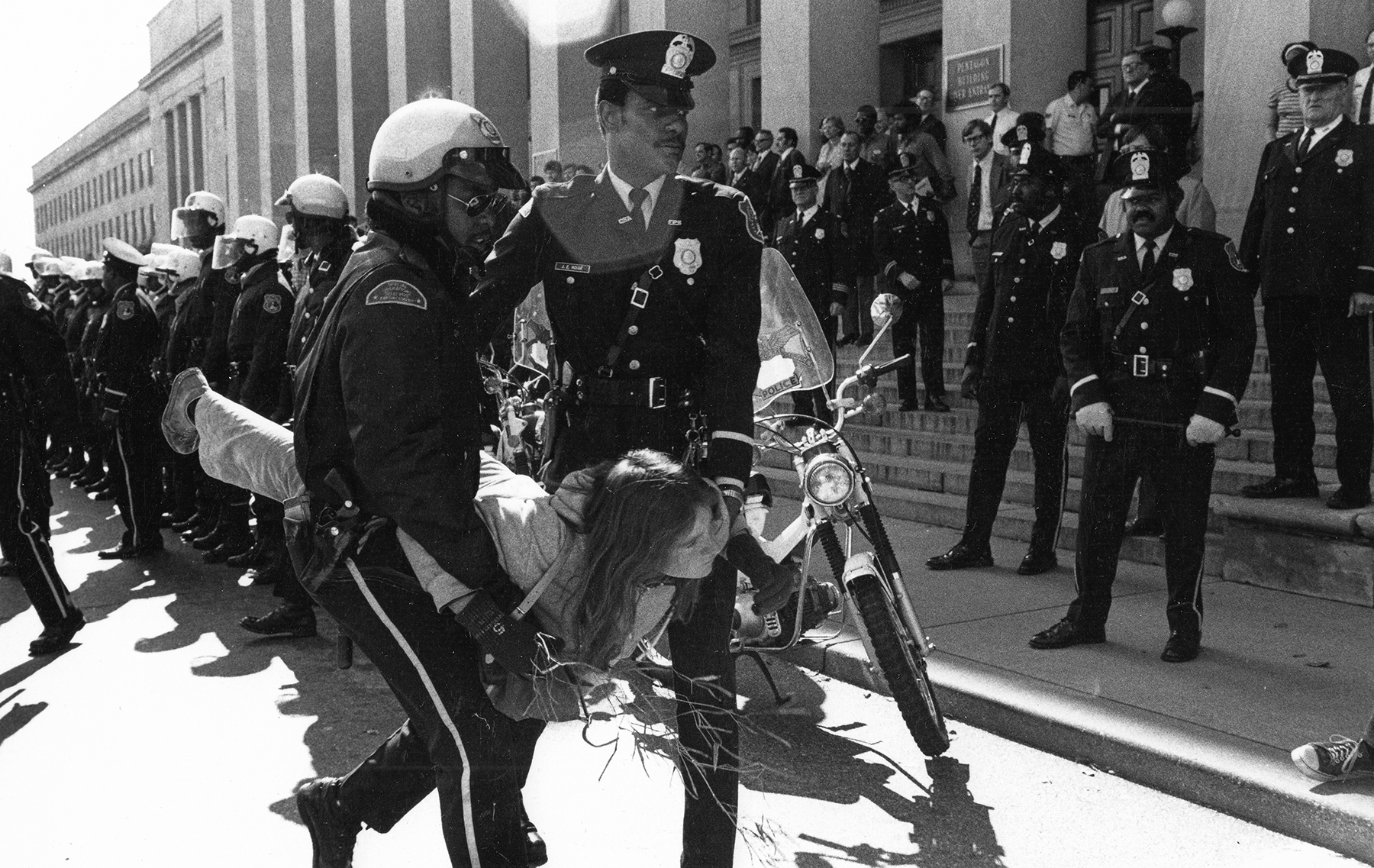
The arrestees were driven to Alexandria for arraignment. All were released on personal recognizance except for six who noncooperated with the police (they were released with all charges dropped after five days of jail and fasting). The hearing and first trial date for the rest of us (two juveniles were also released with all charges dropped) was November 5 on the two charges of ‘‘blocking an entrance or roadway’’ and ‘‘not following official directions.’’ The remaining trial date was November 26.
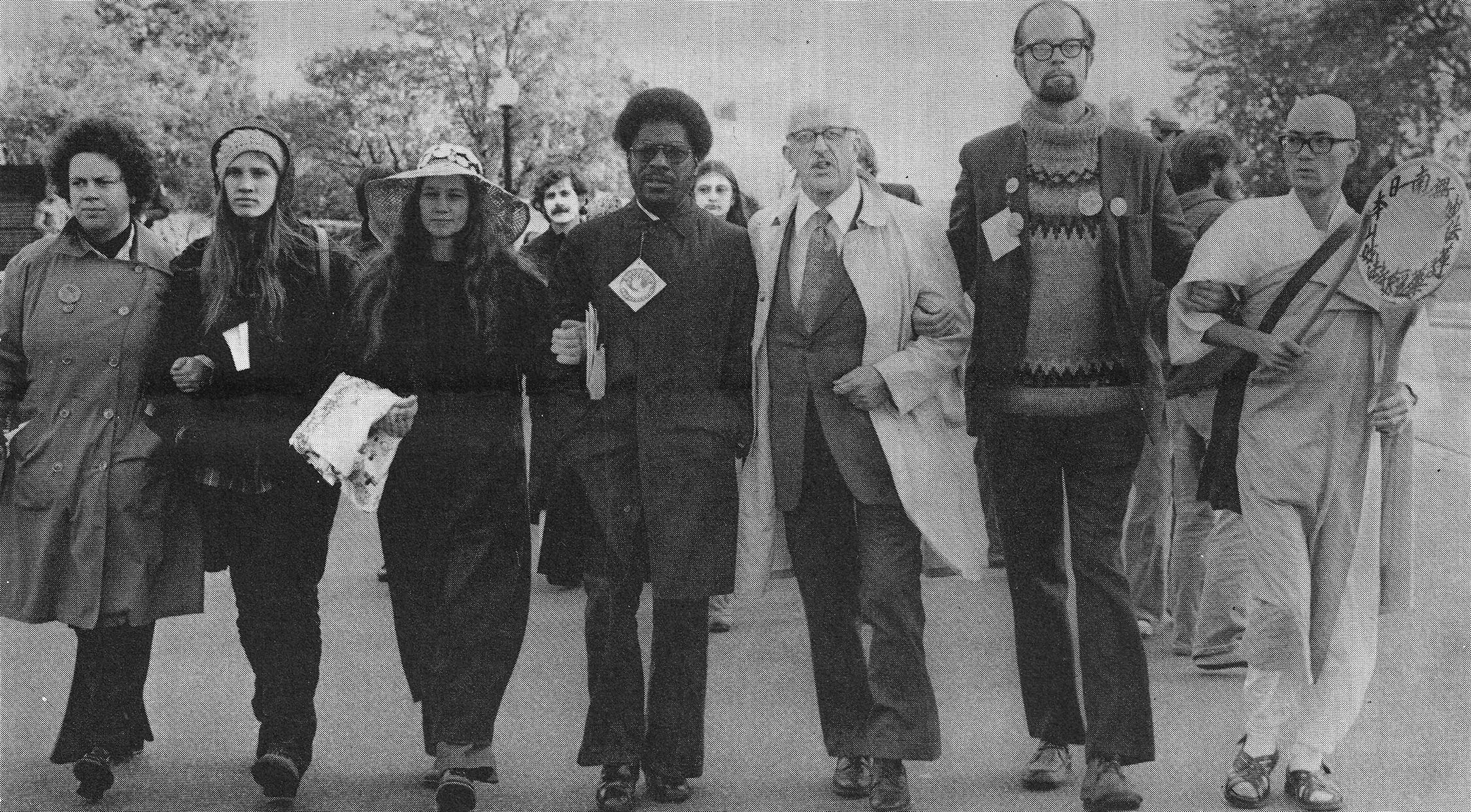
Meanwhile, following the arrests, the “procession of death” was converted to one of life with the unfurling of banners and releasing of balloons, as the march headed back to DC, stopping by the Dept. of Health Education and Welfare, Housing and Urban Development, and the White House where delegations met with officials at each location.
The next day President Gerald Ford denounced those calling for the slashing of military spending to meet domestic needs. Better denounced than ignored.
The Trial
Arlington, November 26, 1976 — It was the final trial for those of us arrested at the Pentagon during the previous month’s conclusion to The Continental Walk. We decided to ignore the charges against us in order to focus on why we were protesting and, in particular, highlight the crimes the Pentagon had committed during the nine months of walking.
When I took the stand as the final witness, two U.S. marshals ominously appeared on either side of me. Perhaps they knew. At the prompting of a fellow defendant acting as counsel, I began reading from a 20-foot long scroll enumerating those Pentagon crimes. Annoyed, the judge interrupted to say this was irrelevant and ordered me to stop. I argued its relevance, then continued reading but was promptly dragged off the stand and into a holding cell by the marshals, leaving behind a commotion in the courtroom.
Another defendant picked up the scroll to continue where I left off but he, too, was dragged out, though not before tossing the unfurling scroll into the air to be snatched by a third defendant and she resumed the reading. At this point the judge declared the trial over and stalked out of the courtroom.
It wasn’t until a year and a half later that we learned we had been convicted, given suspended fines and unsupervised probation for six months, whose time, of course, had long since expired.
The Future
Fortunately, we weren’t holding our breath. During that year and a half period we protested an atmospheric — and largest ever — Chinese nuclear weapons test (November 1976), human rights abuses in South Korea (December 1976), helping boycott J.P. Stevens textiles (March 1977), occupying the Seabrook (NH) nuclear power plant (May 1977), repression in Argentina (June 1977), the South African murder of anti-apartheid activist Steven Biko (September 1977), U.S. aggression against Vietnamese diplomats (March 1978), blocking train tracks at the Rocky Flats (CO) nuclear weapons plant (April 1978), Mobilization for Survival’s protests at the United Nations (Spring 1978).
On October 24, 2026, we will commemorate the 50th anniversary of The Continental Walk as we continue work on existing campaigns against current wars; nuclear and conventional weaponry; wannabe demagogues; capitalism; abuses of immigrants, women, people of color, the poor, while we struggle towards a world without wars and injustice.
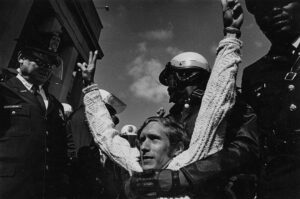
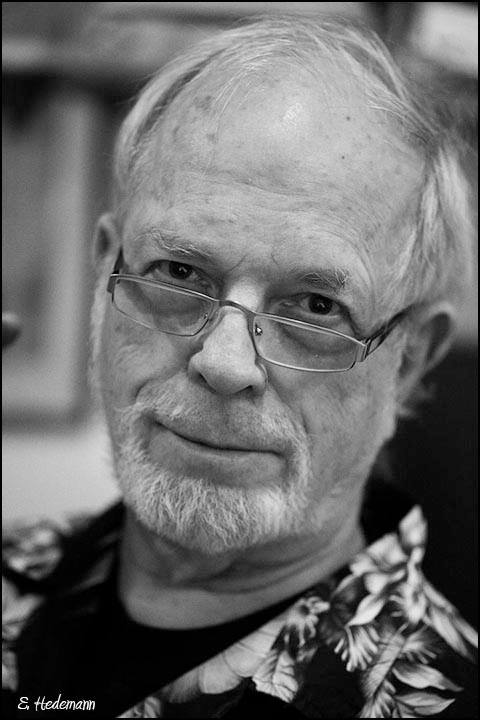
Ed Hedemann was the national coordinator for The Walk (1975-1976) and WRL national staff member (1973 to 1986)
Seventh in a Series of 7 Blogs
Continental Walk Blog #1: Origins
Continental Walk Blog #2: Crisscrossing the Country
Continental Walk Blog #3: Convergence in Washington
Continental Walk Blog #4: The Organizing Begins
Continental Walk Blog #5: Walking, Walking, Walking
Continental Walk Blog #6: National Office and Organizing
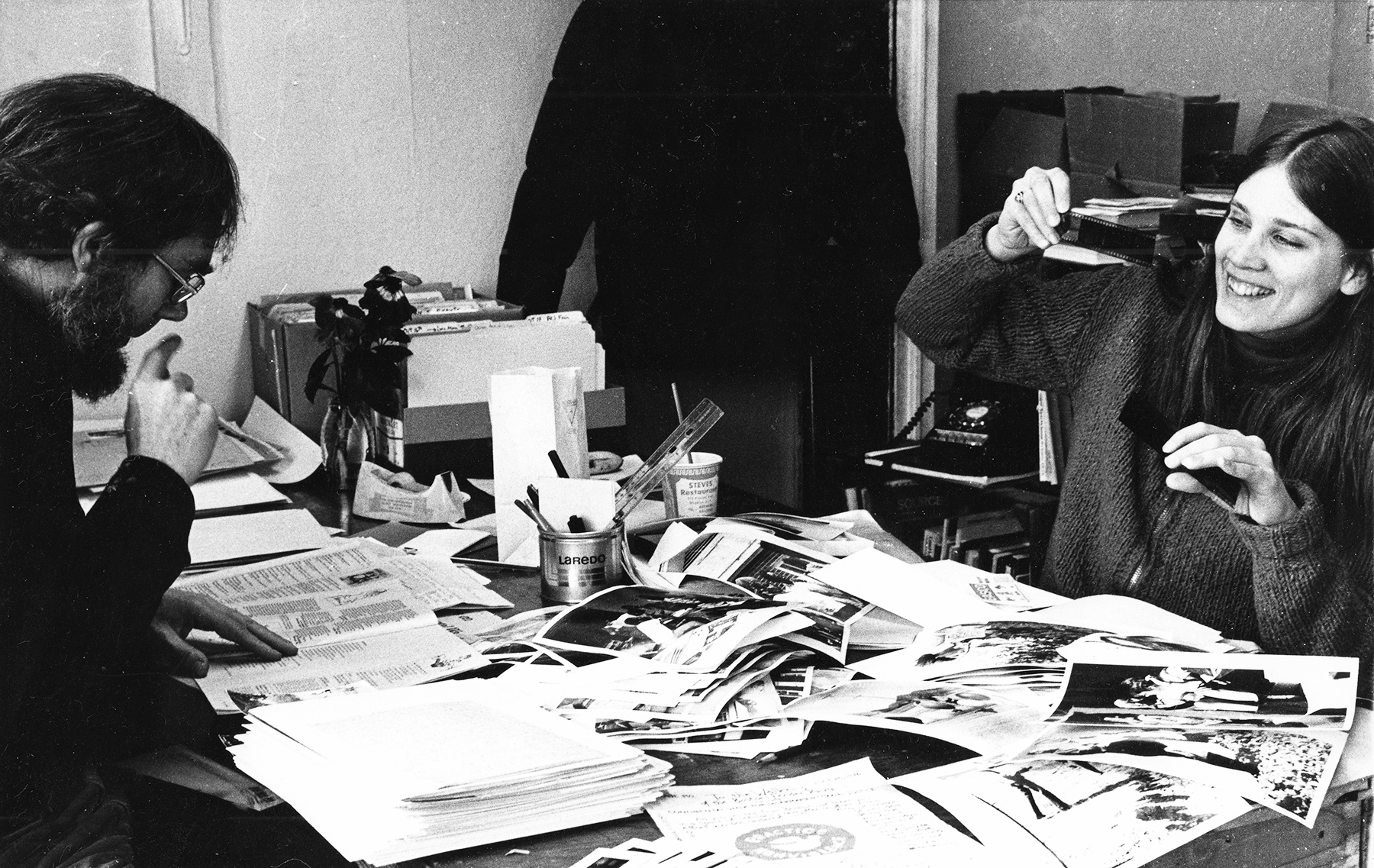
There are many other stories by participants available in fading print publications as well as online (e.g., 1975-1976 issues of WIN magazine and WRL News). However, the best single collection of photos and stories can be found in The Continental Walk book, edited by national office organizer Vickie Leonard and long distance walker Tom MacLean, The Continental Walk, 111 pp, 213 images, 1977. Though long out of print, copies can be found in libraries and from online sellers, such as eBay and AbeBooks.
Share